
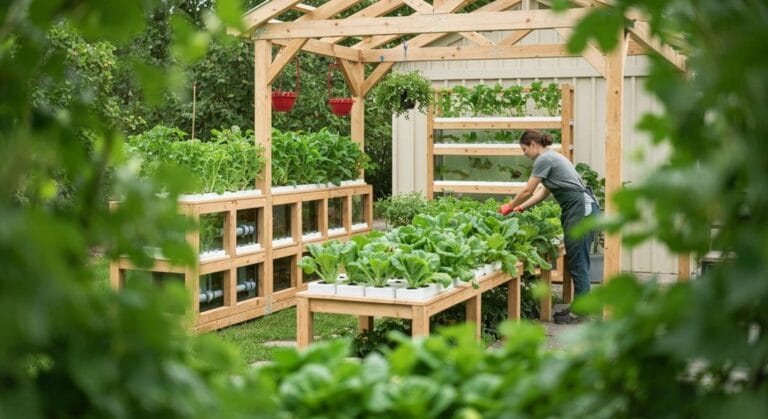

Diving into aquaponics can feel a bit like learning a new language, but don’t worry—I’m here to be your friendly guide. If you’re aiming to master aquaponics system components, the key is understanding that this isn’t just gardening or fishkeeping; it’s a beautifully balanced, closed-loop ecosystem.
When we talk about designing an aquaponics system, we need to focus on the non-negotiables. Think of it as building a sturdy house; you need the right foundation and the essential rooms for it to function.
At its core, every reliable setup, whether it’s a tiny indoor experiment or a large backyard system, relies on five key elements working in harmony. Getting these right is half the battle in designing an aquaponics system.
The Five Key Components of an Aquaponics System
If you want to know what are the five key components of an aquaponics system, here they are. Each one has a critical job in the nutrient cycling process that makes this whole setup work.
- The Fish Tank: This is home base for your aquatic residents.
- The Grow Bed: Where the magic happens—plants clean the water.
- The Water Pump: The circulatory system ensuring movement.
- The Biofilter: The microscopic cleaning crew converting waste.
- The Siphon or Drain: The automatic mechanism controlling water levels.
Let’s break down exactly how to source and size these essential items for how to build a reliable aquaponics system.
1. The Fish Tank: Setting the Foundation
The fish tank is where it all begins—it’s where the food source (the fish) lives, producing the raw fuel for your plants. You might be wondering about the ideal fish tank size for aquaponics.
For beginners, I always advise starting conservatively. A tank of at least 10 gallons is my magic number. Why? Smaller volumes of water fluctuate wildly in temperature and water quality, which is rough on fish.
Choosing a tank of at least 10 gallons is crucial for optimal water quality and fish health, ensuring dissolved oxygen levels stay healthy.
Beyond size, think about shape for circulation. A square or rectangular tank is usually easier to manage for waste collection than a perfectly round one. Remember, we ultimately want those fish waste products cycling efficiently into the system to feed your hungry plants!
2. The Grow Bed: Where Plants Take Center Stage
The grow bed is essentially the filtration system delivered by nature’s chemists—your plants! This is where the essential biofilter function takes place, as roots absorb the nitrates generated from the fish waste.
When we talk about the physical structure, grow bed depth is crucial. Aim for 12 to 14 inches deep. This depth provides enough substrate volume to support strong root systems while also allowing enough space for beneficial bacteria to colonize and do their vital work in nutrient cycling.
Choosing Your Grow Media (Gap Fill)
In the old days, people used pea gravel, but now we have better options! Specifically, we look at the medium that fills this bed. You have a few main players:
- LECA (Lightweight Expanded Clay Aggregate): These are little clay balls. They are pH neutral, lightweight, and offer great surface area for bacteria. They are fantastic, though they can float initially!
- Lava Rock: A fantastic, porous option that’s often cheaper, but you must rinse it thoroughly and double-check its pH, as some types can leach lime into the water.
A general rule for balancing volume is keeping a 1:1 or 2:1 ratio of grow bed volume to fish tank volume. If you have a 50-gallon tank, you want at least 50 gallons of grow bed space.
3. The Water Pump: Maintaining Flow Rate
The water pump flow rate determines how often the water in your system gets exchanged. This pump is the engine that connects your fish habitat to your plant nursery.
For most hobbyist systems employing the flood and drain cycle, you want the pump strong enough to cycle the entire volume of water in your fish tank once every hour. This ensures good oxygenation and consistent nutrient delivery.
Calculating Your Required GPH (Gap Fill)
To figure out how to build a reliable aquaponics system using the right pump, you need to calculate the Gallons Per Hour (GPH) required, factoring in the ‘head height’—that’s the vertical distance the water must travel from the water surface in the fish tank up to the top of your grow bed.
Imagine you have a 100-gallon fish tank, meaning you need 100 GPH minimum. If your grow bed is 5 feet higher than your tank, you have to check the pump’s spec sheet. A pump rated for 300 GPH might only deliver 180 GPH once you account for that 5-foot head loss. Always buy a pump rated higher than your volume calculation to be safe!
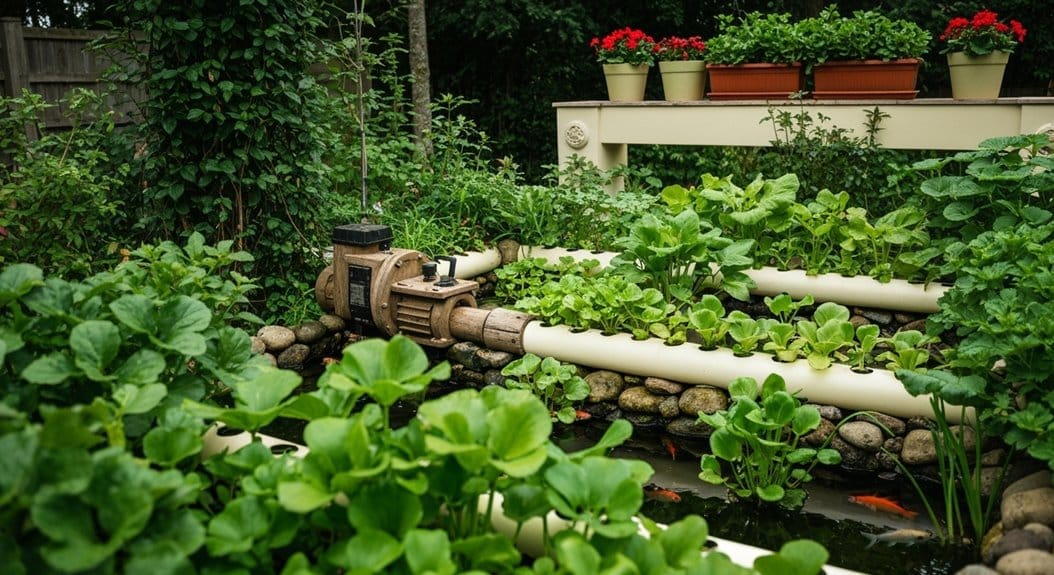
Submersible pumps—the ones that sit inside the tank—are usually best for smaller setups because they don’t need priming like inline pumps do. Just make sure you place a pre-filter screen over the intake!
4. The Biofilter: Turning Waste into Wonder
This might be the component you can’t physically see, but it’s arguably the most important for long-term success. The biofilter function is performed by billions of beneficial bacteria that colonize surfaces within your system, especially inside the grow media.
These bacteria perform nitrification: they first consume the toxic ammonia released by fish waste and convert it into nitrites (also toxic). A second colony then converts those nitrites into nitrates, which are the perfect, plant-friendly fertilizer.
- Ensure you have plenty of surface area for colonization—this is why media-based beds work so well.
- These bacteria require ample dissolved oxygen, which is another reason for good water circulation!
- Don’t crush your bacteria: Never use harsh chemicals or change all your water at once during maintenance.
This entire process is the heart of nutrient cycling, and it takes weeks for it to stabilize, which is why we must “cycle” a new system before adding many fish.
5. The Bell Siphon: Automating the Flood and Drain Cycle
For media-based systems, we usually utilize a passive mechanical timer: the drain. The most popular way to automate dramatic water level changes is using a bell siphon setup.
A siphon allows the water in the grow bed to rise until it hits the trigger height, at which point it breaks the vacuum seal and rapidly drains the water back to the fish tank. This rapid drainage creates that crucial, oxygenating flood and drain cycle.

While a simple drain pipe works, the bell siphon is superior because it completely empties the water down to the root level, giving the roots essential air exposure between floods. Just make sure your standpipe height dictates the maximum water level, and never skimp on fitting the snorkel cap correctly!
Frequently Asked Questions
What are the key components for designing an aquaponics system?
The key components of aquaponics are the fish tank, the grow bed, the water pump for circulation, the biofilter for converting waste, and an automatic drain mechanism like a bell siphon.
What are the five key components of an aquaponics system?
The five essential parts are the fish tank, the grow bed, the water pump, the biofilter, and the siphon or drain system needed for proper water movement.
How do I calculate the right water pump flow rate for my setup?
To determine the correct pump GPH, measure your system’s total water volume and aim for a pump that can cycle that entire volume roughly once per hour, making sure to subtract gallons lost due to the height difference (head pressure).
What is the ideal grow bed depth for a media-based aquaponics setup?
The ideal grow bed depth for aquaponics systems using media like clay pellets or lava rock is usually between 12 and 14 inches to maximize root space and biofiltration surface area.
What is the primary function of the biofilter in nutrient cycling?
The biofilter is where beneficial bacteria live, transforming toxic ammonia from fish output into plant-usable nitrates, which is the core of nutrient cycling in the system.


