


Welcome to the world of urban gardening! If you’ve been staring longingly at your tiny balcony, patio, or windowsill, thinking, “There’s no way I can grow anything real here,” I have great news for you. You absolutely can create a thriving little oasis, even if your footprint is smaller than my kitchen table.
The secret to successful container gardening small spaces isn’t luck; it’s strategy. We’re going to talk about maximizing vertical space, choosing the right blend for your potting mix, and picking plants that actually enjoy cozy living.
Whether you’re aiming to grow fresh herbs for your next pasta dish or want to learn how to grow vegetables on a tiny balcony, this guide is your roadmap. Grab your favorite small trowel; let’s turn that concrete slab into something delicious.
The Magic Behind Small Space Container Gardening Success
When space is the premium commodity, we have to think differently. Container gardening is the ultimate solution for renters or apartment dwellers because it travels well and doesn’t rely on digging into the earth.
Why do people love this setup? Because it offers amazing space efficiency. Utilizing pots, hanging baskets, and vertical racks allows you to stack three or four times the number of plants you could put at ground level. Suddenly, that cramped spot is a productive garden.
It also boosts accessibility. Putting containers on stands or casters lets you raise plants closer to waist height, meaning less bending over. I remember setting up my first tiny herb garden on a rolling cart; being able to wheel it into the sunniest spot on my patio felt like cheating—in the best way possible!
- Maximize yield by using vertical shelving and hanging arrangements.
- Plan container size based on the root needs of the mature plant.
- Ensure every container has sufficient drainage holes—this is non-negotiable!
- Use succession planting to keep areas productive all season long, rather than planting everything at once.
Picking the Right Containers and Materials for Urban Gardening
The container itself is more than just a pretty facade; it dictates how well your roots can breathe and how often you’ll be watering. When choosing sizes, remember: bigger is usually better, even in small spaces, as larger pots dry out slower.
For high-water users like tomatoes or peppers, aim for pots of 5 gallons or more. Leafy greens and herbs are happier in shallower trays or 2–3 gallon pots. If you’re gardening in a very hot urban environment, remember that thin, dark metal containers heat up fast.
We also need to chat about materials. Different materials affect your watering schedule dramatically.
| Material | Pros for Balconies | Consideration |
|---|---|---|
| Terra Cotta (Clay) | Porous material allows roots to breathe well. | Dries out very quickly in the heat. |
| Plastic/Glazed Ceramic | Great moisture retention, lighter weight. | Can overheat roots if dark colors are in direct summer sun. |
| Fabric Grow Bags | Excellent air pruning for roots, great drainage. | Requires very frequent watering, especially small sizes. |
If you decide to go the DIY up‑cycled containers for balcony gardening route—which I highly recommend for sustainability—just make one critical check: drill those drainage holes. If water can’t escape, your soil will become waterlogged, no matter how fancy your potting mix is.
Soil, Drainage, and Potting Mix Essentials for Container Vegetables
This is where many beginners stumble. You cannot just scoop up dirt from the nearest park or garden bed for best potting mix for container vegetables on a balcony. Garden soil is too dense; it compacts in a pot, suffocating roots.
For robust growth, you need a light, fluffy potting mix. Think of it as a layering system:
- Structure/Aeration: Use materials like perlite or coarse vermiculite. These create air pockets, which roots need to breathe. Aim for about 20% of your total volume to be aeration material.
- Moisture Retention: Peat moss or coir (coconut fiber) holds necessary water without becoming a swamp.
- Nutrition: Incorporate rich, finished material like high-quality compost or aged manure. This feeds the microbial life that feeds your plants.

When mixing, ensure it’s fluffy. When you squeeze a handful, only a drop or two of water should come out. Since nutrients leach out fast in containers, you’ll also need to supplement with an organic fertilizer every few weeks.
Container Garden Lighting: Sun vs. Artificial Light
Most edibles, like tomatoes and peppers, require 6–8 hours of direct sun. If your balcony is shaded or you live in a northern climate during winter, you might need help. This is a huge piece of the puzzle for urban gardeners.
If you don’t have consistent sun, don’t despair. Look into affordable, full-spectrum LED grow lights. You can easily set up a small rack for greens or herbs and use a simple timer. This allows you to mimic long summer days, even when the weather outside is overcast.
Best Beginner Crops and Layouts for Small Balcony Gardens
The thrilling question: what can I grow in a small balcony garden? Start with plants that are bred for compact growth, often labeled as ‘dwarf’ or ‘patio’ varieties. These will mature into smaller, more manageable versions of their full-sized cousins.
Easy wins include:
- Herbs (Basil, Mint, Chives)
- Leafy Greens (Loose-leaf lettuce, Spinach)
- Root Vegetables with short cycles (Radishes)
- Compact Fruiting Plants (Dwarf tomatoes, bush beans)
Layout is vital for balcony container gardening tips. Think up! Use wall space for hanging planters or lean a sturdy trellis against a railing for climbing vegetables like cucumbers or pole beans.
We use succession planting here, too. When your early spring lettuce bolts (goes to seed in the heat), immediately pull it out and plant another round of herbs or seeds for a late summer crop in that same spot.
Watering, Light Management, and Seasonal Care
Containers dry out much faster than in-ground gardens, especially on windy balconies. Your job is maintaining consistency.
The golden rule for watering is this: soak thoroughly until you see water running freely out of the drainage holes. This forces the water deep, ensuring the whole root mass gets a drink. Watering lightly every day encourages shallow roots that stress easily.
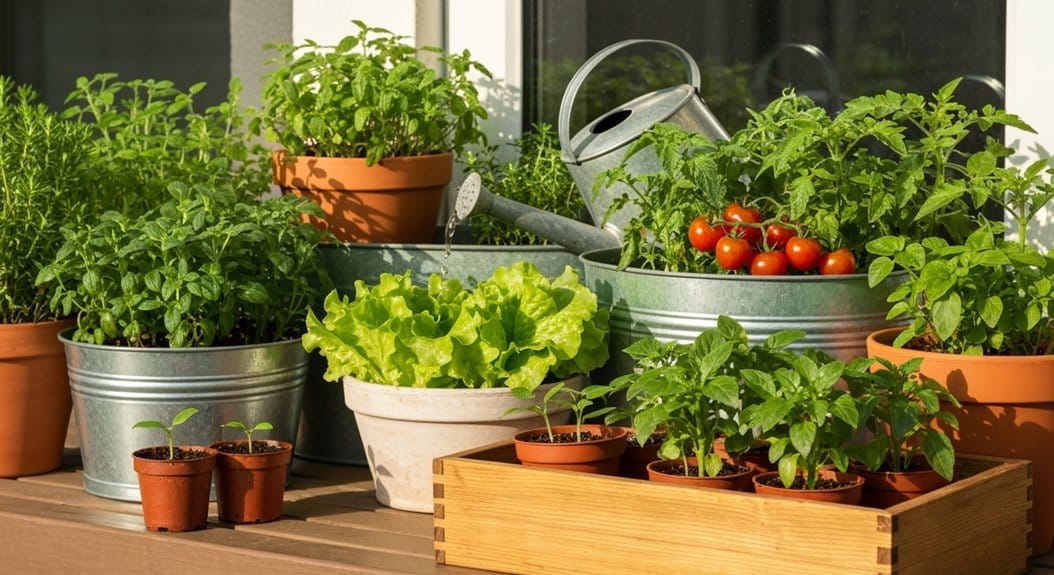
To ensure even growth and prevent leaning toward the light source, rotate your pots a quarter turn every week. This simple action gives all sides of the plant equal sun exposure, resulting in stockier, more uniform plants.
As seasons change, so does your routine. In the peak of summer, watering might become a twice-daily necessity for hanging baskets. In the fall, you’ll scale back significantly. Thinking ahead about overwintering containers is also smart if you plan to keep woody perennials.
Dealing with Pests Organically
Pests thrive anywhere food is grown, but urban gardens can sometimes be less prone to heavy outbreaks than sprawling plots. For organic pest control for container gardens, prevention is key.
Keep the area clean, remove dead leaves promptly, and use companion planting techniques. For instance, planting marigolds near your tomatoes can help deter nematodes. If you spot aphids, a strong blast of water or a gentle wipe with an insecticidal soap or diluted neem oil solution usually sorts them out quickly.
Smart Irrigation for Small Spaces
If you travel or simply forget sometimes (we all do!), explore smart irrigation for small container gardens. Small drip irrigation kits designed for containers are fairly inexpensive and connect easily to a hose spigot or even a small water reservoir.
⚠️ Affiliate Disclosure
This post contains affiliate links, meaning I may earn a commission if you make a purchase through these links, at no additional cost to you. As an Amazon Associate, I earn from qualifying purchases. I only recommend products I genuinely believe will add value.
Alternatively, many self-watering pots feature a reservoir below the soil, allowing the plant to wick up water as needed. This can dramatically extend the time between needed waterings, which is a lifesaver for busy urban gardeners.
A Simple Seasonal Planting Calendar for Balcony Containers
To keep your small garden producing reliably, planning by month helps immensely. This approach ensures you aren’t just planting lettuce in July heat, for example.
Spring Planting (March – May)
- Start seeds indoors for tomatoes and peppers (if your growing season is short).
- Direct sow cool-weather lovers like peas, radishes, and spinach as soon as the danger of hard frost passes.
- Plant bare-root herbs like mint and chives.
Summer Planting (June – August)
- Replace spent cool-weather crops with heat-tolerant varieties like basil, beans, and eggplant.
- Continue planting short-season lettuce varieties in partial shade to prevent bolting.
- Focus on consistent fertilizing during peak growth.
Fall Planting (September – November)
- The second great planting season! Sow kale, fall radishes, and garlic (for next year).
- If you have space, plant root crops like carrots that sweeten after a light early frost.
- Prepare perennial containers for winter insulation.
Frequently Asked Questions
What are the best compact varieties for limited vertical space?
When maximizing vertical areas, look for bush cucumbers, patio cucumbers, pole beans, strawberries that spill over the sides of hanging baskets, and certain varieties of compact grapes or kiwi that can be trained up sturdy trellises.
How do I overwinter container plants in cold climates?
You’ll need to protect the roots, which are exposed on all sides in a pot. Move sensitive plants closer to the house wall or huddle them together. You can also wrap the outside of the pots with burlap or bubble wrap for insulation before the ground freezes solid.
Can I compost kitchen scraps for my container plant fertilizer?
Absolutely! Composting your scraps turns kitchen waste into nutrient-rich “black gold.” For small spaces, consider small worm bins (vermicomposting) or Bokashi systems, which manage waste odor well on a balcony.
How do I prevent pests without harsh chemicals?
A great defense involves diligence and natural allies. Use companion planting (like setting basil near tomatoes). Keep a spray bottle handy with a weak solution of water and a drop of mild dish soap, or use neem oil sprays at dusk to interrupt pest life cycles naturally.
Can I grow perennials in containers long-term?
Yes, but they will eventually outgrow the container. Plants like lavender or rosemary can live for many years, but you must upsize their container every 2-3 years and ensure their winter protection is adequate, as perennial roots are less protected in pots than in the ground.
Conclusion: Your Tiny Garden Awaits
If you’ve made it this far, you are ready to embrace container gardening small spaces. Don’t feel pressure to build an entire farm immediately. Start small—maybe just three sturdy pots filled with quality components we discussed.
Focus on getting the foundations right: excellent potting mix, reliable watering, and choosing plants appropriate for your available sunlight. You will inevitably lose a few plants along the way; that’s not failure, it’s just data collection helping you learn what your unique microclimate demands.
Before you know it, you’ll be harvesting crisp greens and fragrant herbs, proving that you don’t need acres to garden—you just need a creative mindset and a few well-placed containers!


