


So, you’ve lovingly assembled your raised vegetable beds. They look perfect, the soil is rich, and you’re ready for cucumbers galore! But wait—the garden path is also a highway for unwanted visitors. Dealing with pests in these prime growing spaces requires a good strategy, which is why we’re diving deep into raised bed pest control.
Forget the idea of spraying everything that moves. We’re aiming for something much smarter: Integrated Pest Management (IPM). Think of IPM as an entire lifestyle change for your garden, focusing on prevention first. It’s about creating an environment where pests struggle to thrive, rather than constantly playing whack-a-mole after they arrive.
This guide is for every DIY raised-bed grower, whether you’re obsessed with organic gardening or just want a few less chewed-up tomato leaves. We’ll cover everything from what you build with, to the microscopic helpers you can invite in. Let’s get those beds pest-proof!
Building for Defense: The Foundation of Raised Bed Pest Management
The best time to manage pests in your raised bed is before you even add that first shovel of soil. Smart construction creates instant, long-term barriers. If you’re building new, keep these structural tips in mind.
First, choose your materials wisely. Opt for rot-resistant lumber or masonry. And please, skip the old, untreated railroad ties; they can leach harmful chemicals into your lovely growing medium. For height, aim for about 4 inches high if you plan on steady irrigation, though higher is always better for drainage.
Our main line of defense against subterranean bandits, like voles or gophers, is the barrier underneath. Install hardware cloth barrier for raised‑bed pests (a fine metal mesh) directly onto the ground before you fill the bed. This stops burrowers dead in their tracks.
Now, let’s talk loading up the bed itself. Many experienced growers use the lasagna layering technique. This involves alternating layers of rich organic material, like compost and aged manure, with finer soil. This technique boosts fertility and aeration, which naturally supports stronger root systems and better soil health.
One final structural touch: mulch depth matters. Applying 2 to 4 inches of organic mulch, like shredded straw, performs double duty. It conserves moisture and, importantly for us, suppresses weeds that pests love to hide beneath.
Soil Health and Pre-Season Pest Suppression
When we talk about raised garden bed pest management, we can’t ignore what’s beneath the surface. Healthy soil promotes resilient plants that shrug off minor pest pressure. We need to address soil quality, especially if you’re trying organic pest control for raised beds.
If you haven’t already, consider soil testing & pH management for pest resistance. Did you know that certain soil pH levels can actually stress plants, making them magnets for specific pests? Aim for the optimal range for your chosen vegetables. Maintaining proper nutrient balance means your plants are less likely to signal “EASY MEAL!” to aphids or mites.
For beds heading into winter or waiting for spring planting, consider solarization. This is one of those raised‑bed IPM techniques that feels a bit extreme but works wonders against soil-borne pests and weed seeds. Solarizing means covering the moist soil tightly with clear plastic during the hottest part of the summer. The goal is to superheat the top layer, safely cooking off pathogens and overwintering larvae.
Another great way to improve the ecosystem is through cover crops. Research the best cover crops for raised‑bed pest suppression. Plants like crimson clover or hairy vetch can improve your soil structure and, when terminated correctly before planting in the main season, can suppress nematodes and certain insect eggs.
Regular Scouting: Knowing When and How to Check
If planting smart is defense, scouting is intelligence gathering. You need to know when should I scout my raised beds for insects? The short answer: weekly, rain or shine, during peak growing season. The best times are early mornings or late afternoons, when pests are often more active but the sun isn’t blazing.
What should you bring on your patrol? Keep it simple: a hand lens for tiny pests, some sticky traps (often yellow!), a small collection container, and a notebook or app to track what you find. Remember, regular scouting also supports overall garden soil health because you notice changes to the surface environment.
| What to check | Tool | Why it matters |
|---|---|---|
| Leaves (upper/underside) | Hand lens | Find eggs, larvae, sap-suckers |
| Flying insects | Sticky trap | Early detection of aphids/whiteflies |
| Soil surface/mulch | Visual + scoop | Slugs, roly pollies, improper soil signs |
When you scout, move in a systematic pattern—maybe an ‘S’ pattern across the bed—so you don’t miss spots. You’re looking for eggs, tunnels, or signs that you need intervention. Most importantly, only act when pest numbers hit your established threshold; otherwise, you risk hurting your helpful bugs.
Physical Barriers: How to Prevent Pests in Raised Garden Beds
Physical and mechanical controls are your go-to methods. These are the low-tech, high-impact solutions that stop pests before they even get close to your prize tomato.
The first line of defense is physical exclusion. Use row covers or fine mesh netting draped over hoops to keep flying insects, like squash vine borers or flea beetles, away from young plants. Make sure you secure the edges tightly to the soil so burrowers can’t slip underneath.
For ground-level threats like cutworms, you need collars. This is where a great DIY hardware cloth barrier for raised‑bed pests often comes into play, but for seedlings, simple collars made from toilet paper tubes or plastic cups work perfectly. Push them down an inch into the soil around the stem.
When you find bugs, remove them actively. Hand-picking is incredibly effective and gives you a much better look at what’s plaguing your plants. For large populations of smaller crawlers, a small, handheld vacuum cleaner (used only for garden duty!) can suck them up and deposit them into soapy water. It sounds dramatic, but it works on aphids and whiteflies!
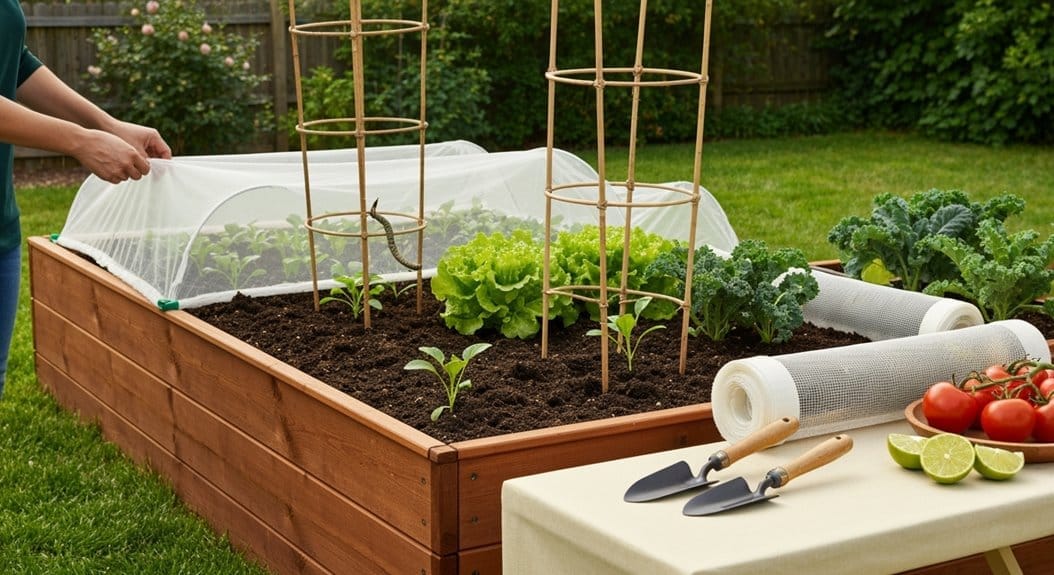
Also, review your irrigation. A great technique for raised beds is integrating drip irrigation to reduce pest habitats. Drip lines keep water focused exactly where the roots need it—the soil. This prevents the wet, soggy leaf surfaces that slugs and fungal diseases absolutely adore.
⚠️ Affiliate Disclosure
This post contains affiliate links, meaning I may earn a commission if you make a purchase through these links, at no additional cost to you. As an Amazon Associate, I earn from qualifying purchases. I only recommend products I genuinely believe will add value.
Biological and Organic Treatment Strategies
When prevention and physical controls aren’t quite enough, we can turn to nature’s own cleaners. This is where beneficial insects save the day!
Are you wondering how to release ladybugs in a raised‑bed garden? It’s simple: Order them from a reputable supplier and release them just after dusk when they are less likely to fly away immediately. They will dramatically hunt down pests like aphids and spider mites. You can also invite lacewings or predatory mites to set up shop in your garden.
For direct application, we rely on organic treatments. Products based on neem oil are a staple, acting as both a repellent and growth disruptor. You can also use spinosad, which is derived from soil bacteria and is excellent against caterpillars and leaf miners without leaving harsh residues.
Another powerhouse is Bt (Bacillus thuringiensis). This is a specific type of bacterium that only targets the larvae of certain insects, like cabbage worms. It’s nature’s targeted pesticide—effective on the bad guys, safe for everyone else.
Finally, don’t forget the power of herbs and flowers through companion planting. Basil near tomatoes can confuse pests, while marigolds are often used to deter nematodes. These plants offer masking scents that confuse pests looking for your prize veg.
Seasonal Maintenance Checklist for Raised Vegetable Beds
Pest management isn’t just a summer activity; it’s a year-round commitment to health. This involves sanitation and proper soil replenishment.
At the end of the season, be rigorous about sanitation. Clear out all spent plant debris, weeds, and fallen leaves. This denies many overwintering pests and disease spores a safe harbor until next spring.

Once everything is clear, it’s time for renewal. Add a fresh 1–2 inch layer of high-quality compost to replenish nutrients. This is much better than constantly tilling deep, which disturbs the soil structure. Remember to practice crop rotation—don’t plant tomatoes where tomatoes were last year. This interrupts the lifecycle of any soil-borne pests that might have taken up residence.
And always keep those tool sanitation in mind! A quick wipe-down with a mild bleach solution (1 part bleach to 9 parts water) when moving between beds prevents spreading disease or transferring eggs.
Frequently Asked Questions
How do I deal with slugs and snails in my raised beds?
Slugs are the bane of every gardener! For raised bed pest control, focus on barriers and environment control. Use beer traps (shallow dishes sunk to soil level), copper tape around the perimeter of the bed if possible, or handpick them in the early morning. Since they love moisture, ensuring you avoid overhead watering and integrating drip irrigation is key to reducing their habitat.
What is the best mulch depth for pest control in raised beds?
We generally recommend a depth of 2 to 4 inches of organic mulch, like straw or shredded leaves. This depth helps suppress weeds that pests use for cover, but it shouldn’t be so deep that it stays perpetually soggy, which attracts slugs and promotes damp, unhealthy soil conditions.
Are row covers necessary if I am using organic pest control for raised beds?
Row covers are highly recommended, even when using beneficial insects or sprays like neem oil. Covers provide exclusion against airborne pests like cabbage moths or squash bugs. The trick is to install them early, before the pests arrive, and remove them when your crops need pollination!
Can companion planting harm beneficial insects?
Yes—companion planting can sometimes cause issues if done incorrectly. Overcrowding beds with too many companion plants can reduce airflow, creating microclimates that favor mold or mites. Always select companions known for pest repulsion (like dill or basil) and ensure you aren’t crowding out the space needed for your beneficials to hunt effectively.
What are cutworms and how do I keep them out of my new seedlings?
Cutworms are fat, gray larvae that live just under the soil surface and chew through tender stems right at soil level overnight. The best way to deal with them in a seedling situation is through physical barriers. When transplanting, place a stiff cardboard or plastic collar (about 3 inches high) around the base of the stem, pressing it at least an inch into the soil. This is a specific application of raised bed pest control that works immediately!
Conclusion
You’ve moved beyond just growing food; you’re now mastering raised bed pest control. Remember, the philosophy here is proactive protection, not reactive spraying. Build smart with barriers, feed your soil well, and scout religiously every week.
By integrating physical controls like row covers, using targeted organic sprays like spinosad only when necessary, and remembering that healthy soil leads to strong plants, you give nature the best tools to manage itself. Stick to frequent checks, use those IPM techniques, and your harvest will flourish within your beautiful, protected raised beds!


