
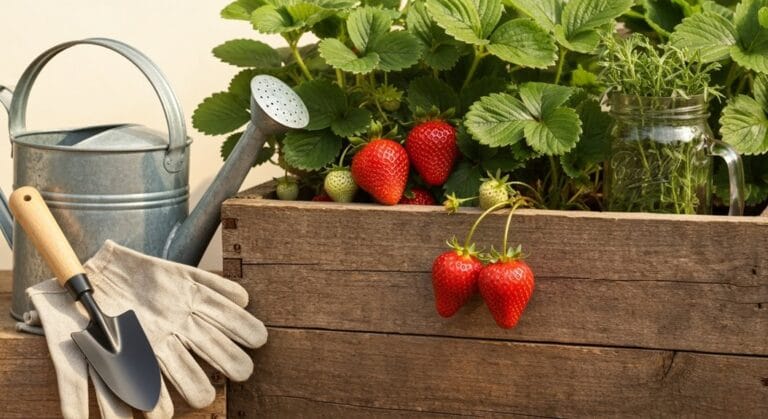

I used to grow tiny, disappointing strawberries. Then I switched to raised beds and changed everything about how I planted them. Now? My berries are plump, consistent, and honestly, they taste like summer itself.
The secret isn’t complicated. It’s about choosing the right variety, building proper soil, spacing plants correctly, and watering consistently. Let me walk you through exactly how I do it.
Key Takeaways
- Pick the Right Variety: Choose zone-adapted, disease-resistant types like Earliglow or Evie-2 for reliable big berries.
- Soil Recipe: Mix 2 parts topsoil + 2 parts potting soil + 1 part compost. Aim for 6–12 inches deep.
- Spacing Matters: Plant crowns 12–18 inches apart in staggered rows to maximize root and fruit development.
- Water Consistently: Provide 1–2 inches weekly during fruiting using drip irrigation.
- Maintenance: Mulch to keep roots cool, pinch early flowers, remove runners selectively, and protect fruit from birds.
Choose the Right Strawberry Variety for Your Bed
Here’s the truth: picking the right variety is the single smartest decision you’ll make before planting. It saves work and gives you bigger, happier berries.
I learned this the hard way. My first year, I planted whatever looked cute at the nursery. Result? Tiny, inconsistent fruit. Now I choose based on three things: harvest rhythm, climate zone, and how much space I have.
Choosing the right variety before planting saves effort and produces happier, bigger berries.
Understanding Strawberry Types
June-bearing varieties produce one big crop in early summer. They’re perfect if you want to preserve or freeze a large batch all at once.
Day-neutral varieties produce fruit continuously throughout the season, as long as temperatures stay between 60–85°F. These are my go-to for steady, fresh eating.
Everbearing varieties give you two smaller harvests—spring and fall. They’re a nice middle ground if you want variety.
Picking a Variety That Works for You
I focus on three criteria: zone adaptation, disease resistance, and yield consistency.
Most popular cultivars thrive in Zones 4–8. Check your USDA hardiness zone first—it tells you if a variety will survive your winters and handle your summers.
Disease resistance matters more than you’d think. Look for varieties marked resistant to powdery mildew, leaf spot, or red stele (a root disease). Earliglow and Evie-2 are both solid, disease-resistant choices I’ve had success with.
If you’re thinking about selling your berries, pick high-yield types that produce consistent sizes. Tiny alpine strawberries fetch premium prices for flavor, but they’re labor-intensive. Larger, uniform berries sell faster and easier.
Match your flavor goals with yield expectations. Are you eating fresh, freezing, or making jam? Different varieties excel at different tasks.
Prepare Soil and Build a Healthy Raised Bed
Strawberries are picky about their real estate. Getting the soil right now saves you a season of frustration later.
I build my beds with intention. The soil is everything—it determines drainage, root health, and ultimately, berry size.
The Soil Mix That Works
Start with a simple, proven recipe: 2 parts topsoil + 2 parts potting soil + 1 part compost.
This ratio improves soil texture (how loose and airy it feels) and adds fertility without overwhelming the plants. Topsoil gives structure. Potting soil keeps things light and fluffy. Compost feeds the plants and supports beneficial microbes.
Ensure your bed has at least 6–12 inches of loose soil for strawberry roots. Shallow soil means stressed, shallow roots—and small berries.
Sourcing Quality Compost
I always source compost from trusted suppliers or use my own finished pile. Store-bought compost can harbor weed seeds, which is the last thing you need in a raised bed.
Test your soil pH every few years. Strawberries prefer slightly acidic soil, around 6.0–6.5 pH. If your soil is too alkaline, add sulfur. Too acidic? Add lime. A simple soil test kit from any garden center takes the guesswork out.
Location and Sun Exposure
Keep your beds in full sun—strawberries need at least 6–8 hours daily. Shaded beds produce fewer, smaller berries.
Avoid compacted fills under your bed. Raised beds enhance drainage and root health, but only if water can drain freely underneath.
Planting Depth, Spacing, and Early Care
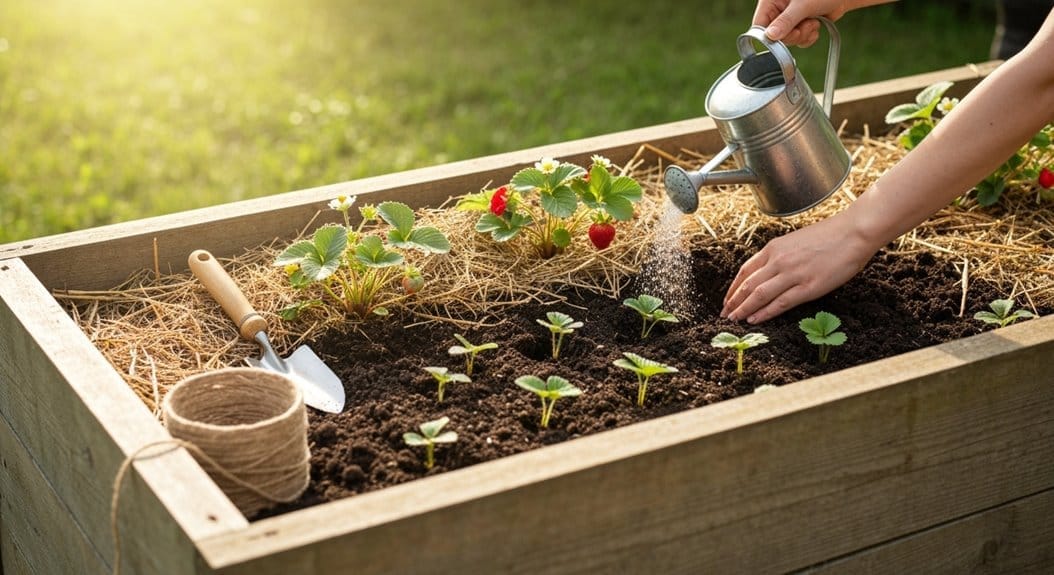
Think of strawberries like sun-loving roommates. Give each plant enough space and the right bed depth, and they’ll thrive. Crowd them, and everyone suffers.
Strawberries are sun-loving roommates—give each an 8–12 inch soil bed and plenty of elbow room.
Setting Crowns at Soil Level
The crown is the little nub where leaves meet roots. This is critical: set it right at soil level, not buried.
Bury the crown too deep, and you risk crown rot (a fungal disease that kills plants). Plant it too shallow, and roots dry out. Soil level is the sweet spot.
Mix compost into the top 3–8 inches so nutrients sit where roots grow. Strawberry roots are shallow—they don’t dig deep.
Spacing for Maximum Yield
Use 12–18 inch spacing between plants. I prefer staggered or zigzag patterns to pack beds efficiently without crowding.
For a typical 4×8 raised bed, I fit about 12–16 plants comfortably. This gives roots room to expand and air to circulate, reducing disease.
Early Care After Planting
After planting, mulch immediately with straw (not hay—hay has seeds). Mulch keeps roots cool, suppresses weeds, and prevents berries from touching soil.
Pinch early flowers the first season. I know it hurts, but this forces plants to focus energy on roots and crowns, not fruit. Stronger plants next year mean bigger berries.
Remove early runners (the long stems that spread out). Some runners are fine later, but early ones drain energy from the mother plant.
Watering, Feeding, and Pest Management
Now that you’ve planted correctly, the real work begins. Watering, feeding, and pest management keep your strawberries productive all season.
Watering Strategy
Strawberry plants have shallow roots, so consistent moisture is essential. Water about 1–2 inches weekly during fruiting. New plants need roughly 1 inch four times monthly until established.
I use drip irrigation or soaker hoses. Morning watering lets foliage dry, which prevents fungal disease. Check soil moisture 2 inches deep—if it’s dry, water.
Drip systems use about half the water of overhead sprinklers. They’re worth the small investment.
Feeding for Big Berries
Feed with a balanced fertilizer (something like 10-10-10). Avoid excess nitrogen—it produces leafy plants with small berries.
I fertilize lightly every 3–4 weeks during the growing season. Stop feeding after harvest to let plants rest.
Pest and Disease Monitoring
Scout your beds weekly. Look for slugs, aphids, spider mites, and birds.
For slugs, I use beer traps or hand-pick at dusk. For aphids, a strong water spray or insecticidal soap works. Row covers protect young plants; netting protects ripening fruit from birds.
Encourage beneficial predators like ladybugs and lacewings by planting flowers nearby. They eat the pests you don’t want.
Harvesting, Pruning, and Seasonal Bed Maintenance
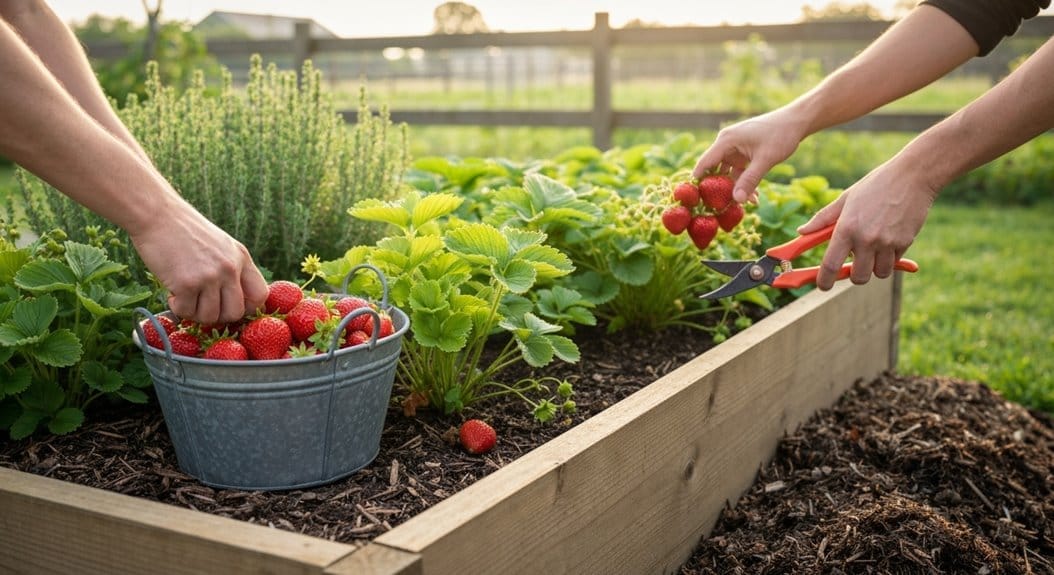
Harvest timing and post-season care determine next year’s crop. Get this right, and your beds produce for years.
When and How to Harvest
Pick berries when they’re fully red, ideally in the morning after dew dries. Ripe berries come off with a gentle pinch or scissors.
Harvest every 2–3 days during peak season. Leaving overripe berries on the plant invites rot and pests.
Post-Harvest Pruning
After harvest, prune old leaves and trim runners to focus fruiting energy. Remove any damaged or diseased foliage immediately.
This cleanup prevents disease carryover to next season.
Seasonal Bed Maintenance
In late fall, mulch beds heavily for winter protection. Clear debris and inspect for disease.
Light fertilizing and runner management in spring prepare beds for the next season. If plants are 3+ years old, consider replacing them—productivity drops after year 3.
| Task | When |
|---|---|
| Pick ripe fruit | Morning, every 2–3 days |
| Remove damaged fruit | Immediately |
| Prune leaves/runners | Post-harvest; selective during season |
| Mulch/cover beds | Late fall |
Frequently Asked Questions
Can I Grow Strawberries From Supermarket Store-Bought Berries?
You can grow strawberries from supermarket berries, but it’s unreliable: seed viability is low and chemical treatments reduce success. If you care for others’ gardens, choose local organic fruit or nursery starts to serve them.
How Do I Propagate New Plants Using Runners?
Many hands make light work: you’ll select healthy runners, secure nodes to soil, mind runner timing so plantlet rooting occurs, keep mother attached, water consistently, provide shade, sever and transplant, sharing extra plants with neighbors.
How Do I Protect Ripening Fruit From Birds?
Use bird deterrents and netting strategies: raise netting on stakes or bottles so pollinators access flowers while you’ll shield fruit, build cages for helpers to harvest, and add visual or noise deterrents to protect berries.
Can I Grow Strawberries in a Greenhouse or Indoors?
Yes, you can grow strawberries indoors or in a greenhouse; like cradling sunlight, you’ll plan greenhouse design and manage light exposure, tend plants patiently, and you’ll share sweet, pesticide-free harvests to nourish family and community.
How Many Years Will a Strawberry Plant Produce Fruit?
You’ll get productive strawberries for about 2 to 3 years, sometimes up to 3–5 with great care; you’ll manage fruit longevity and yield timing by renewing runners, replacing old plants, and sharing surplus with others.
Conclusion
You can grow big strawberries in a raised bed. It’s not magic—it’s just the right variety, proper soil, consistent watering, and smart maintenance.
My neighbor Sara grew 1–1.5 inch berries after edging soil with compost and watering twice weekly. She started with just two plants and now has four beds. The key? She stuck to the basics: proper spacing, drip irrigation, and selective runner removal.
Start small, dream big, and enjoy the process. Your first harvest of truly big, sweet strawberries will make it all worth it.


