


If you’ve ever stared longingly at a massive zucchini and thought, “I wish I had the space for that,” I have fantastic news for you. You absolutely can grow incredible squash in raised bed gardening setups, even if your yard is the size of a postage stamp.
Growing raised bed squash isn’t just possible; when done right, it’s often more productive and certainly cleaner than traditional row gardening! If you’re ready to master how to grow squash in raised beds, it boils down to three things: perfect soil, smart spacing, and a little vertical planning.
The Ideal Soil Mix for Raised Bed Squash
Squash are what we cheerfully call “heavy feeders.” They demand a robust, nutrient-dense foundation that also drains beautifully, which is why raised beds are perfect for them.
When preparing your mix, skip the heavy native dirt. We want lightness and aeration for those developing roots. A great starting point is aiming for a 1:1 ratio of rich compost to a quality soilless growing mix. If your beds are deep, feel free to bulk this up with up to 20% good quality topsoil for added texture.
The absolute key here is drainage. Roots need to breathe! Keep the mix loose; it will settle slightly once you water it in. Just make sure you level off the surface a few inches shy of the rim when you finish.
- Compost: Provides the slow-release nutrition your squash craves all season long.
- Soilless Mix: Ensures excellent aeration and prevents compaction as the plants mature.
- Testing Matters: You might sneak a soil test in here. It tells you exactly what those nitrogen levels are and if you need to tweak your pH before planting.
Feeding Your Hungry Raised Bed Squash Plants
Since squash are such **heavy feeders**, we need to ensure our nutrient timing is spot-on. While that fantastic compost mix gives you a great initial boost, they truly benefit from supplemental feeding once they start setting flowers.
When initially setting up your bed, incorporate a balanced, slow-release organic fertilizer into the bottom third of the planting area. That steady, foundational feeding is essential.
However, the real action comes a few weeks later: once the plants start flowering, switch to a liquid feed high in Phosphorus and Potassium (the P & K in N-P-K) every two weeks. This encourages robust blooming and fruit set, rather than just producing massive green leaves!
When to Plant Squash in Raised Beds Based on Frost Dates
Timing is critical, and squash plants absolutely despise the cold. They are tender annuals—planting too soon means frost might nip them, or cold, wet ground can cause your precious seeds to rot before they even sprout.
You must wait until the ground temperature is reliably warm. We are looking for a **soil temperature of 65°F**, but honestly, if you can push for 70°F+, you’ll see much faster and healthier initial growth. Cold, wet soil is the enemy here.
Plant squash only after soil reaches at least 65°F—ideally 70°F+; cold, wet ground causes seed rot before germination.
If you are tracking your local frost dates, aim to plant your seeds about two weeks after the last expected frost has safely passed. If patience isn’t your virtue (and whose is, when gardening?), you can jump-start things by starting seeds indoors 2–4 weeks prior. Just be gentle when transplanting; squash roots dislike being disturbed!
Raised Bed Squash Planting Method: Mounds and Spacing
Even in a tidy raised bed, creating little hills or mounds where you plant is incredibly helpful. This slightly elevates the root zone, helping the soil warm up faster and ensuring superior drainage right where the seeds land.
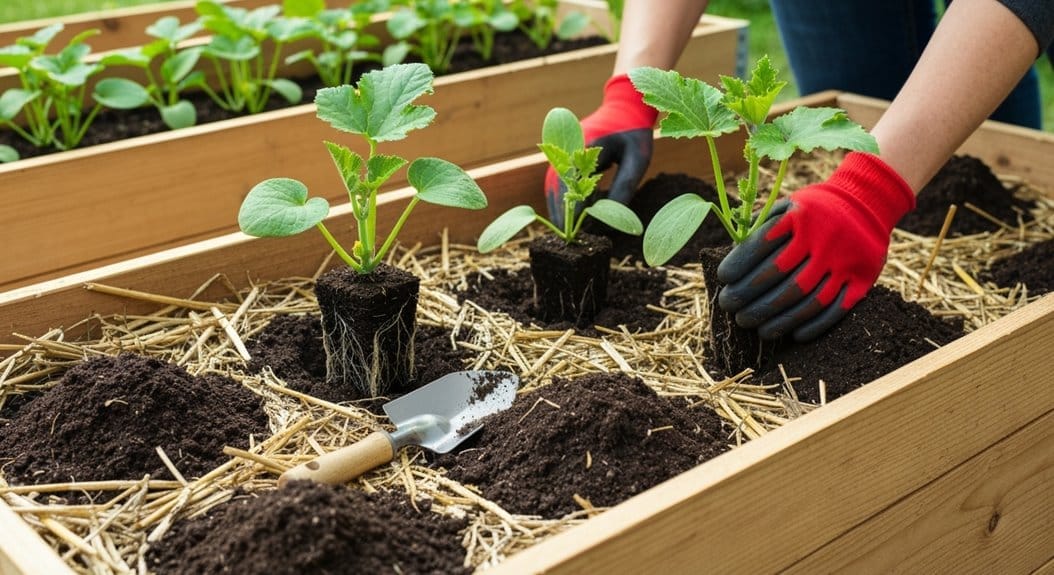
Build these mounds about 3 inches high and 18 inches wide, using that nutrient-rich mix we discussed. Plant your seeds about 1 inch deep, aiming the narrow edge down if you can tell which way is up (it helps speed things along!).
Spacing is critical, especially when focusing on the **best squash varieties for raised beds**:
- Summer Squash (e.g., Zucchini): Space your mounds roughly 3–4 feet apart.
- Winter Squash (e.g., Butternut): These runners need more legroom; give them 4–6 feet between mounds.
When seeding, typically place 2–3 seeds in the center of the mound. Here’s an important tip: Once the seedlings sprout their first true leaves, you must thin them out. Select the strongest looking plant and simply snip the others right at the soil line. Please don’t pull them out, as you risk damaging the strong one’s roots!
Watering Schedule and Mulch Management for Squash
Squash vegetables are incredibly thirsty, but just plopping a hose on top every day encourages shallow roots. We want a deep, thorough drink delivered consistently.
An ideal **watering schedule for squash in raised beds** means aiming for about 1 inch of water spread out over one to two deep soakings per week during peak summer heat. This encourages strong root growth deep within your bed.
If you are serious about clean gardening, you should adopt drip irrigation. Drip systems deliver water right to the root zone and, crucially, keep the foliage dry, which is your best defense against fungal diseases.
Once things are growing well, lay down a thick layer of organic mulch, like straw or shredded leaves. This stabilizes the soil temperature and preserves that precious moisture. Just remember to keep the mulch clear of the plant’s central stem crown—we don’t want pests or rot hiding right next to the main stem!
| Task | Why | Tip |
|---|---|---|
| Watering | Keeps roots hydrated | Deep soak, only 1–2 times per week |
| Mulch | Retains water/temp | Keep clear of main stem crown |
| Light | Essential for fruit | Needs 6–8 hours of direct sun |
Vine Management, Vertical Growing, and Pest Control
If you are growing winter squash, those vines truly want to roam, but in the confines of a raised bed, sprawling quickly turns into overcrowded chaos. So, how do you manage the sprawl? You go vertical!
Vine trellising is an absolute game-changer for space efficiency and overall plant health. Utilize sturdy stakes, strong cattle panels, or reliable wire mesh. As the vines emerge, gently guide them upward, tying them loosely to the support structure.
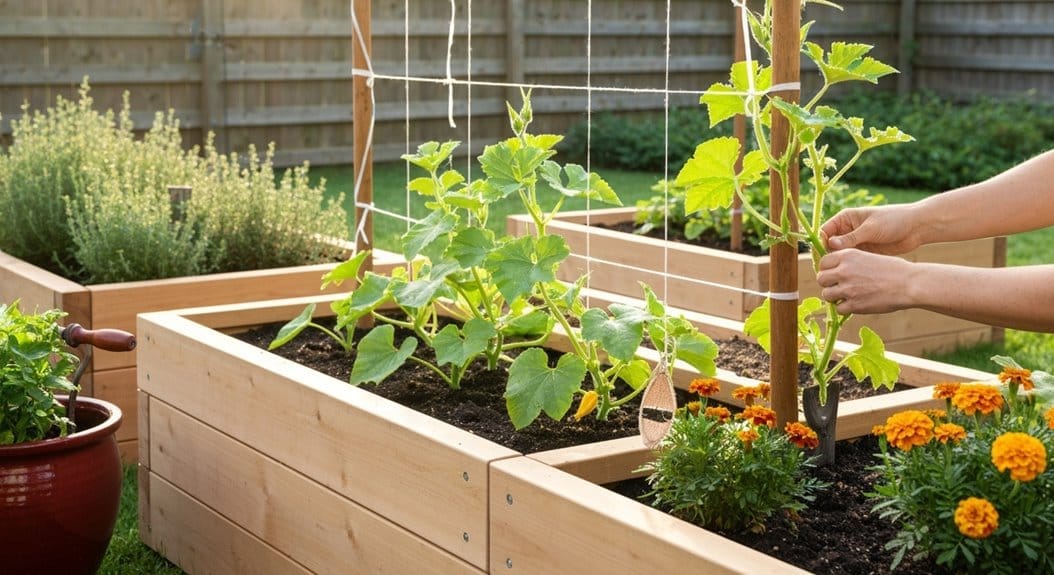
While you’re managing your **vine management**, use pruning to your advantage. Remove any lower leaves that are touching the moist soil surface. This simple cut directs the plant’s energy toward making actual fruit and immediately reduces the available hiding spots for soil-borne diseases and early pests.
Organic Pest Control Methods for Squash in Raised Beds
We all dread squash bugs and vine borers, but managing them organically in your contained raised bed environment is very achievable when you are proactive. Early detection is truly your best defense.
A fantastic **organic pest control method for squash in raised beds** involves deploying floating row covers immediately after planting. This creates a physical barrier against early pests, like squash vine borers, seeking to lay their first eggs. Remember to remove these covers once flowering begins so those crucial pollinators can get to work!
If you spot vine borer damage—often indicated by sudden wilting or sawdust-like frass coming out of the stem—you need to act immediately. You can carefully slice the stem lengthwise, gently remove the borer, and then immediately bury that section of the stem in fresh soil or compost. This encourages the vine to grow new roots above the damaged area.
For general garden hygiene, always practice annual crop rotation (even swapping locations within your beds helps), and ensure you remove and destroy any heavily infested vines immediately after harvest to avoid pests overwintering.
Frequently Asked Questions About Raised Bed Squash Gardening
How do I choose the best squash varieties for raised beds and small spaces?
When space is limited, skip the massive sprawling heirloom types and look specifically for varieties bred to be compact. Look for terms like “bush,” “compact,” or “patio” listed on the seed packet. Excellent choices often include bush zucchini like ‘Patio Star,’ smaller pattypan varieties, and determinate (non-vining) winter squash types.
What is the ideal soil temperature for planting squash in raised beds?
Squash are heat lovers! You really want that consistent **soil temperature 65°F** range, but if you can wait for it to consistently hit 70°F or slightly above, your seeds will germinate faster and experience less risk of rot. Always plant after the danger of frost has passed.
What is the best way to use vine trellising for squash in raised beds?
Using **vine trellising** is key for managing rambling plants like winter squash in small spaces. You need strong support—like a heavy-duty cattle panel secured to the bed frame. Gently tie developing vines loosely to the structure so that they climb upward, keeping the fruit suspended in the air, which improves airflow and prevents ground rot.
How do I ensure I water correctly for squash in raised beds?
The secret to a good **watering schedule for squash in raised beds** is consistency and depth. Aim to deliver about 1 inch of water spread out over 1–2 deep soakings per week, depending on the heat. Using drip irrigation is highly recommended because it soaks the root zone without wetting the leaves, stopping fungal spread.
Can I grow squash organically using only natural pest control methods?
Absolutely! Growing **raised bed squash** organically relies heavily on optimizing soil life with great compost and using physical barriers. Employ floating row covers early in the season, use mulch heavily, and inspect leaves daily for the first signs of squash bugs. A healthy, well-fed plant resists pests better than a stressed one.
Conclusion
You now have the full roadmap to successfully **grow squash in raised beds** without letting the vines turn your tidy garden into an overgrown jungle. By focusing on getting that soil warm—aiming for a reliable **soil temperature 65°F** or higher—creating rich mounds, and giving your plants consistent, deep water, you are setting yourself up for genuine abundance.
Don’t forget to incorporate **vine trellising** for training those runners, prune lower stems to fight off problems, and keep a close eye out for pests. Give these hungry plants the nutrients they demand, and you’ll find that **raised bed gardening squash** reaps huge rewards in fresh, homegrown flavor!


