Tag raised beds

Grow Epic Cucumbers in Raised Beds with Trellis

cucumbers raised beds trellised pm fixes

Growing cucumbers in raised beds with vertical trellising maximizes space, airflow, and yields while minimizing disease. Prepare compost-rich soil at pH 6.5, build a 4-6 ft DIY trellis anchored deeply, space plants 36-48 inches apart, and train one main stem while pruning laterals weekly. Read on to master every step.

Growing Carrots in Raised Beds: Perfect Roots Guide

carrots thriving in raised beds

Growing carrots in raised beds requires 12-18 inches of loose, rock-free soil at pH 6.0-6.8, enriched with well-rotted compost. Sow seeds 1/4-1/2 inch deep, spaced 3/4 inch apart, then thin to 2-3 inches at true leaf stage. Provide 1 inch of weekly water via drip irrigation and use row covers against carrot fly. Read on for varieties, calendar, and FAQs.

How to Water Raised Beds: Perfect Schedule & Tips

A woman watering lush green vegetables in raised garden beds with a metal watering can, demonstrating proper watering frequency and techniques.

Water raised beds with 1 inch of water per week, delivered in 1-2 deep soakings to promote strong roots. These beds dry faster due to quick drainage, warmth, and exposure, so check soil moisture 2-4 inches deep daily with a finger or meter. Adjust for seasons: daily in summer heat, less in spring. Read on to master frequencies, methods, and crop-specific advice.

Grow Romaine in Raised Beds: Sun, Timing & Shade Tips

romaine in raised beds

Romaine lettuce requires 4–6 hours of direct sun daily, 10-12 weeks of indoor growth before transplanting, and 10 inches of spacing in raised beds for optimal head formation. To prevent bolting, provide 30–50% shade cloth when temperatures exceed 75°F, and succession sow every 2–3 weeks for continuous harvest. Read the full guide to master the timing, sun, and shade for crisp romaine.

Raised Beds: Benefits, Limits, and When to Use

raised beds improved drainage soil control

Raised beds warm soil 2-3 weeks faster than in-ground plots and drain better, allowing earlier planting of warm-season crops like tomatoes and peppers. Fill them with a 70% topsoil and 30% compost mix at 10-12 inches deep for most plants, or 12-18 inches for root crops. While they cost more upfront and require frequent watering, raised beds cut weeds by up to 97% and work best on poor, rocky, or contaminated soil. Read the full guide to learn when raised beds beat in-ground gardens and how to build yours.

Automatic Drip Irrigation for Raised Beds: Easy Guide

raised bed irrigation guide

Drip irrigation for raised beds is a low-pressure system that delivers water precisely to roots via emitters on tubing lines. Key parts include a timer, pressure regulator, filter, mainline, and 0.5-2 GPH emitters. It cuts water use by 30-50% over sprinklers and aids weed suppression. Read on for installation steps and maintenance.

Raised Bed Covers: Install, Choose & Maintain Easily

raised bed covers guide

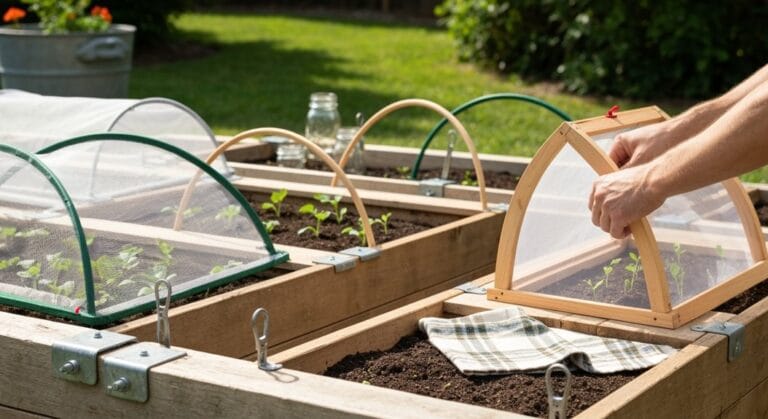
Raised bed covers are hoop-framed enclosures using UV-stabilized fabrics, plastics, or nets to protect raised garden beds from frost, pests, sun, and weather while enabling season extension and soil warming. Select row covers for frost protection or shade cloth for heat; install mini hoops every 4 feet with rebar anchors. Maintain monthly with inspections and ventilation. Read on for detailed steps and ROI examples.

Lasagna Gardening in Raised Beds: No-Dig Magic

lasagna garden raised bed

Lasagna gardening in raised beds is a no-dig method of building fertile soil by layering cardboard, coarse twigs, carbon-rich browns, and nitrogen-rich greens inside a raised frame. Begin with weed-blocking cardboard, add 2-3 inches of drainage, then alternate moist 3-4 inch layers of browns to greens in a 3:1 ratio. Layers decompose in 4-6 months into crumbly, nutrient-dense soil. Read on for the full guide.

Birdies vs Vego Raised Garden Beds: Ultimate Review

birdies vego raised beds

Birdies and Vego raised garden beds both feature 24-gauge Aluzinc-coated steel with stainless hardware for 20+ year lifespans. Birdies excels in larger interior footprints and rigid bracing for max planting area. Vego leads with quicker assembly and modular shapes for flexible designs. Read on for pricing, warranties, and your best pick.