


So, you’ve realized your tiny outdoor space needs a serious upgrade in seclusion? We’ve all been there—sipping coffee on a Thursday morning only to feel like you’re performing on a crowded stage. That’s where a great set of balcony privacy screen options comes in handy. They aren’t just about hiding; they are about crafting a truly usable, peaceful extension of your home.
Think of this guide as your friendly, comprehensive rundown. We are diving deep into the best balcony privacy screen material, what technical specs actually matter when dealing with wind and sun, and exactly how to install the perfect screen without turning your weekend into a DIY disaster. Ready to reclaim your fortress of solitude?
The Essential Benefits: Crafting Your Outdoor Sanctuary
If you’re asking, “What are the real benefits of a balcony privacy screen?”, the answer goes far beyond just blocking neighborly stares. We’re talking privacy, comfort, and a serious aesthetic boost, all wrapped up together.
A quality screen acts as a micro-climate modifier for your small space. It can significantly cut down on wind noise reduction, making those evening dinners much more enjoyable. For those basking in constant sunshine, certain materials offer impressive UV protection, which helps keep your outdoor furniture from fading into oblivion while providing pleasant shade.
I remember struggling through a Zoom call last summer; the ambient city noise was deafening! Installing a simple, mid-density mesh balcony privacy screen instantly made that space usable again—it was a massive return on investment for my sanity alone.
- Personal Sanctuary: Creates an immediate feeling of enclosure and quiet withdrawal in busy areas.
- Wind & Noise Dampening: Muffles strong gusts and reduces ambient city sounds, drastically improving comfort levels.
- Aesthetic Upgrade: Provides a clean, customized look to otherwise utilitarian-looking railings.
- Safety Layer: Adds a sturdy visual barrier, an added layer of security for households with curious pets and children.
Types of Balcony Privacy Screens Compared: Airflow vs. Absolute Blockage
Choosing the right type of screen is arguably the biggest decision here. Ultimately, you are weighing how much airflow you need against how much visual blockage you require. Do you need softly filtered light, or are you aiming for a total visual wall?
For many people, especially those renting or needing flexibility, a dynamic option is best. That’s where a retractable balcony privacy screen shines. These function much like a high-end roller shade; you pull them out when needed for immediate privacy and retract them completely when you want full sun exposure.
Mesh vs. Solid Screens: Winning the Airflow Debate
This choice entirely hinges on ventilation. A mesh balcony privacy screen is an incredibly popular choice because it allows breezes to pass through, which is crucial on stuffy summer balconies. Quality mesh products usually target an 85% to 95% privacy rating, giving you great seclusion while preventing the screen from turning into a sail.
On the flip side, a solid balcony privacy screen—often constructed from dense composite or sleek metal panels—offers maximum sightline blocking and far superior wind resistance. If you live right on the coast dealing with persistent, heavy gusts, a solid panel might be necessary, but you absolutely must ensure it is vented or specifically rated for high wind loads.
| Feature | Mesh Screen (e.g., HDPE) | Solid Screen (e.g., Aluminum) |
|---|---|---|
| Airflow | High (promotes ventilation) | Low (blocks wind completely) |
| Privacy Rating | Typically 85–95% | 98–100% |
| Installation | Generally easier DIY friendly | Often needs sturdier anchoring points |
| Cost | More budget-friendly options available | Higher initial purchase price |
Our friendly rule of thumb here is simple: If you prioritize staying cool with natural air circulation in the warmer months, stick with high-quality technical mesh. If the primary goal is absolute peace and quiet against extremely noisy neighbors, lean toward density and solid materials.
⚠️ Affiliate Disclosure
This post contains affiliate links, meaning I may earn a commission if you make a purchase through these links, at no additional cost to you. As an Amazon Associate, I earn from qualifying purchases. I only recommend products I genuinely believe will add value.
Fixed vs. Roller Systems: Permanent Walls vs. On-Demand Control
Once you settle on the visual look—mesh or solid—you then choose the deployment style. Fixed screens are permanent installations, usually tensioned tightly using cables or integrated zipper systems attached directly to the railings. They are robust and require little adjustment once set up.
The retractable balcony privacy screen (or roller screen) is the choice for maximum versatility. Need privacy for that intense afternoon video meeting, but want full sun for morning stretching? Just roll it out and back in. These systems are fantastic, especially the motorized versions, but they do carry more moving parts that might need occasional inspection.
Balcony Privacy Screen Material Durability Deep Dive
Longevity isn’t just about looking pristine on day one; it’s about standing up to real-world weathering. You want materials that offer proven protection against the sun’s spectrum and constant moisture exposure.
Powder-coated aluminum is an outstanding material choice: it remains lightweight, it simply doesn’t rust, and it holds up wonderfully against humidity—making it perfect for general urban use. If you choose a fabric screen, look for synthetics like PVC or high-density polyethylene (HDPE) that are explicitly UV-stabilized. A quality fabric should always list its GSM (grams per square meter); aiming for materials around 180 GSM usually offers a sweet spot balance between strength and manageable weight.
Climate-Specific Screen Recommendations
Where you live dramatically impacts what screen will survive the year. Your material choice must prioritize your local weather profile first. This is an essential factor for condo boards and renters, as replacement costs add up quickly.
If your balcony faces constant exposure to salty sea air, non-corrosive materials are essential. You must avoid standard steel hardware; commit entirely to marine-grade stainless steel or specifically engineered aluminum fasteners. Salt corrosion moves fast!
Conversely, if you are enduring relentless, baking desert sun, the focus shifts entirely to solar defense. Look for the highest UPF rating possible—a rating above 50+ is what you should demand on the product data sheet, typically found in heavy-duty vinyl or specialized polyester weaves designed to resist premature brittleness.
Key Technical Specs: Look Beyond the Pretty Colors
Please, don’t make your final decision based only on the color swatch. You are investing in measurable performance. When shopping, ask pointed questions about these technical ratings; you are paying for verifiable protection, not just appearance.
We already touched on the 90–95% sightline reduction for privacy coverage. For fabric weights, remember that heavier isn’t inherently better if the weave tears easily. A tight, high-density weave around 170–190 GSM usually provides the best intersection of durability and manageable resistance to wind shear.
Wind Resistance and Structural Safety Standards
This metric is where building managers and condo boards need to pay very close attention. A screen that acts as a giant sail during peak storm season can cause significant property damage or endanger others. Always verify the specified wind load capacity before purchasing.
Heavy-duty screens rated poorly for wind permeability (or high resistance) often require professional anchoring systems to secure them properly. Here’s a major structural safety tip: If your screen runs along a wide span, consider intentionally designing small venting gaps. This reduces the total surface area catching the air, lessening the chance that the entire screen or railing system gets overstressed.
Balcony Privacy Screen Cost Guide & Return on Enjoyment
Let’s tackle the sensitive topic of money, because nothing derails a home project faster than sticker shock. The balcony privacy screen cost varies significantly based on material science and functional complexity.
Budget solutions usually involve basic synthetic mesh secured tautly with heavy-duty fasteners, potentially running you $50–$150 for a standard 5×10 foot section. These are fantastic for temporary fixes or renters who need an immediate solution.
Mid to high-end executions involve precision-cut, powder-coated aluminum panels or fully motorized roller screens. These can easily start in the $400 range and climb well over $1,000 per section. While the initial cost is steeper, the return on investment balcony privacy screen isn’t purely financial—it’s measured by how much peace and usability you gain back in your outdoor square footage.
DIY vs. Professional Balcony Privacy Screen Installation
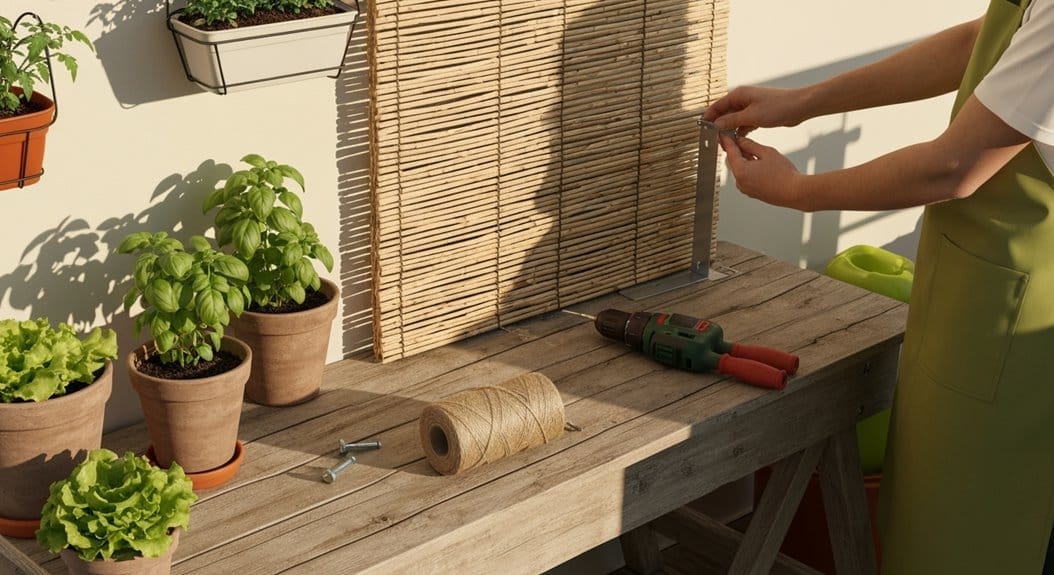
Can you tackle this yourself, or is it time to call in experienced hands? For most universal mesh screens that attach neatly to existing railings via included grommets and simple ties, this is a very achievable DIY task. You’ll need a good level, heavy-duty scissors (or snips), and patience.
When should you hire a specialist for balcony screen installation? If you are dealing with heavy, semi-permanent solid panels made of composite, or if the job requires drilling into concrete slabs or installing complex electronic mounting hardware for a new roller screen, hire a professional. They guarantee that structural integrity remains sound, which is non-negotiable when dealing with material weight at height.
Balcony Privacy Screen Building Code & Fire Safety Checklist
This is the part everyone postpones, but you absolutely must address it. Ignoring balcony privacy screen regulations can result in fines or requirements for immediate, costly removal. Before ordering anything, confirm two non-negotiable things.
First, find out the balcony privacy screen fire rating requirements for your specific property. Many large apartment complexes or townhome associations mandate that materials meet specific Class A or Class B fire standards, especially if the screen is close to a neighbor’s unit. Aluminum generally sails through inspection easily; synthetic fabrics require full verification paperwork.
Second, always confirm height restrictions and approved attachment methods. Some associations strictly forbid screens that extend above the top rail height, or they might only permit specific, non-permanent fixtures. Documenting your adherence to all balcony screen safety standards ensures you stay protected legally.
Maintenance, Durability, and The Eco Angle
Even the highest-quality materials need routine care to maximize their lifespan. The good news is that maintaining your screen shouldn’t take up prime relaxing time.
For typical fabric or mesh screens, a simple rinse with a standard garden hose every few months often handles general dust and pollen, especially if you live near a busy road. For tougher grime or potential mildew growth, use a mild, non-abrasive soap and a very soft cloth. Please, treat your power washer with suspicion; that intense, concentrated pressure can easily shred mesh materials or fatally damage protective coatings.

When considering eco-friendly balcony screen options, aluminum is inherently a winner because it is easily and infinitely recyclable. If you opt for plastic-based meshes, such as HDPE, look closely at the supplier’s specifications—see if they explicitly mention that the material uses high levels of recycled content, which lowers the overall environmental footprint of your outdoor investment.
Frequently Asked Questions About Balcony Privacy
Can balcony privacy screens affect mobile signal or Wi-Fi reception?
Yes, dense barriers like solid metal panels or thick composite materials can sometimes interfere with weaker cellular or Wi-Fi signals near the edge of your balcony. Mesh screens usually cause minimal to no interference. If signal strength is vital for work, select a quality mesh screen or a shade-style retractable model you can easily roll up when high performance is needed.
Are balcony screens allowed by building or condo regulations?
That varies significantly from one community to the next. You must always check your Homeowners Association (HOA) documents or building management guidelines first. Many communities strongly prefer removable, non-permanent fixtures that don’t alter the façade. Get official written approval before you purchase or install anything!
What is the best balcony privacy screen material for windy coastal areas?
The top choices are precision-cut, powder-coated aluminum panels or very heavy-duty, UV-stabilized HDPE mesh rated at 180 GSM or higher. Crucially, ensure all hardware, screws, and mounting brackets use marine-grade stainless steel to actively fight against salt corrosion.
What privacy rating should a mesh balcony screen have for good seclusion?
For effective, comfortable seclusion that truly blocks visibility, you should look for a rating between 90% and 95% visibility blockage. Anything listed significantly lower than that often looks quite translucent, especially when the afternoon sun hits it directly.
How do I calculate balcony privacy screen cost comparison between mesh vs solid?
As a rough guideline, quality mesh screens often cost about 40% to 60% less than custom-sized solid aluminum or composite panels of equivalent dimensions. For a more accurate long-term view, remember to factor in potential repair or replacement costs over five to ten years.
Conclusion: Making Your Balcony Truly Yours
Upgrading your balcony with the right balcony privacy screen is genuinely one of the fastest ways to reclaim genuinely usable, enjoyable square footage from an overlooked area. Remember the key takeaway as you shop: Your final choice must always find a balance between your personal needs—like wind protection and privacy—and the physical structure of your building, alongside all local rules.
If you prioritize keeping things breezy and staying mindful of budget, a high-quality mesh balcony privacy screen is likely your champion. However, if you demand total visual and auditory seclusion against a loud streetscape, that stronger, fixed solid panel might well be worth the added investment. Measure meticulously, secure everything tightly, and get ready to enjoy the quiet transformation!


