


Do you look at your balcony and see wasted potential? Maybe it’s just a concrete slab where the morning coffee mug gets lonely. Well, friend, I have great news: you absolutely can turn that cozy nook into a productive, beautiful, year‑round balcony garden.
It isn’t about needing acres of land; it’s about smart strategy. We need to talk design that lasts through all four seasons, choosing the right plants for your specific space, and mastering urban balcony gardening without breaking the bank.
Transforming your small space into a green haven does more than just look nice. You are actively helping the environment, supporting those hardworking local pollinators, and shrinking your grocery bill. Ready to dig in? Let’s cultivate something amazing!
Why Year-Round Balcony Gardening Is More Than Just Growing Stuff
Thinking cyclically, as you will for balcony gardening year round, yields benefits far beyond pretty flowers. For instance, those plants you grow? They’re tiny superheroes fighting airborne dust and capturing CO2 right outside your window.
Plus, those pots and leaves help combat the dreaded “urban heat island effect,” meaning your immediate area stays a little cooler when summer cranks up the heat. It’s a win-win for comfort.
Crucially, you create vital pit stops for nature. Planting beautiful, pollinator-friendly balcony plants turns your small area into an essential feeding station for bees and butterflies struggling in the city grit.
On a personal level, there’s no contest. Being able to pick fresh herbs or cook with salad greens you grew yourself is deeply satisfying. I once had a huge basil plant that was basically overflowing the railing—my neighbor kept asking if I was heading to the farmer’s market! Small changes make a big impact.
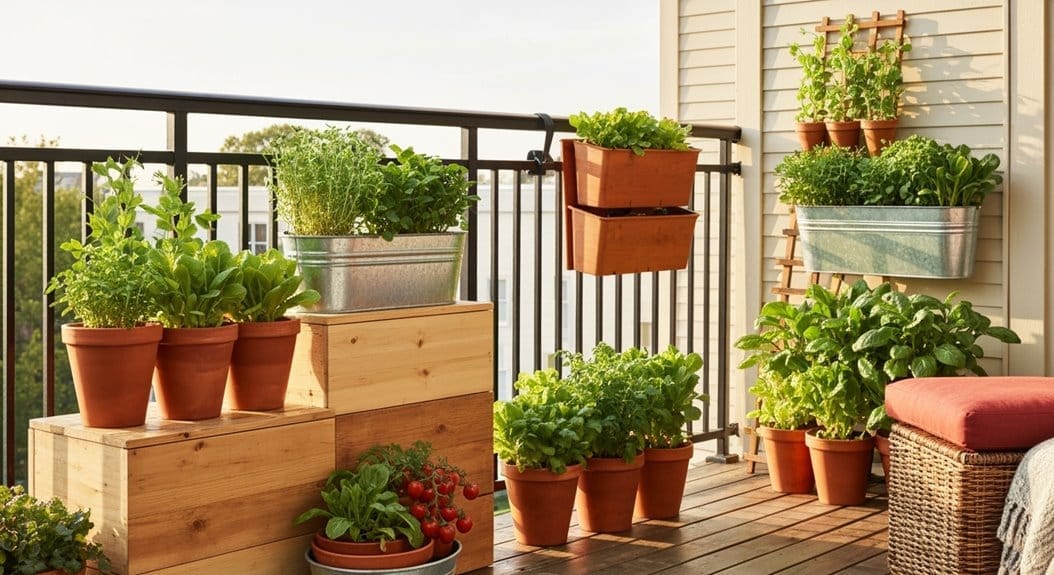
Year-Round Plant Strategy: Designing for Every Season
The cornerstone of successful year‑round balcony gardening is accepting the seasonal hand you’re dealt. You won’t get tomatoes in January, but you can absolutely have something green or blooming 365 days a year.
Spring: This is the season of cool-season productivity. Think peas, compact lettuces, and herbs like parsley and chives. These love the mild weather as the ground thaws.
Summer: Bring on the heat lovers! Rosemary, thyme, and colorful geraniums thrive now. If your balcony gets serious sun, try a compact cucumber variety. Remember to watch your sun exposure; you might need to rotate pots to manage peak afternoon heat.
Autumn: We shift to texture and hardiness. Ornamental kale looks stunning, and pansies offer late color. This is also a great time to sow seeds for hardy overwintering crops.
Winter: Structure is key. Focus on evergreen herbs like rosemary or hardy dwarf shrubs. Even better, tuck hardy containers under a railing or against a warm wall; the existing structure helps moderate the temperature.
Finding the Sun: Decoding Your Microclimate Sun and Shade
Seriously, before you buy anything, spend a day watching your balcony. Where does the sun hit, and for how long? This simple check solves half of all balcony gardening mishaps.
If you have a south-facing spot, you have an outdoor oven! That’s perfect for sun worshipers like peppers and flowering annuals, but you’ll be watering often. North-facing balconies are shadier; embrace plants that love low light, like ferns, hostas (great for texture!), and spinach.
A neat trick for dealing with shadow, especially in high summer, is using light or reflective surfaces. Think about setting pots on light-colored saucers to bounce a little extra light back up onto lower leaves. It sounds minor, but it helps maximize every ray.
Smart Space and Weight Management: Picking the Right Vessels
For many of us living in apartments or condos, weight is the invisible bully of balcony garden design ideas. Your building has limits, and they are usually stricter than you think!
This makes selecting lightweight containers for balcony gardens absolutely critical. Ditch the massive, thick terracotta unless you are planting a tiny succulent in it. Instead, look at high-quality plastic, durable resin, or fiberglass. These materials save pounds, hold moisture well, and let you safely add more plants.
How do you get more plants without more floor space? Go up! Vertical gardening on balconies is your secret weapon. Railing box planters are fantastic for letting herbs cascade over the edge, freeing up the floor. Wall-mounted pockets or simple tiered shelving units allow you to layer your greenery densely.
| Container Type | Best For | Quick Tip |
|---|---|---|
| Plastic/Resin | Mobility, balconies with strict weight limits | Choose light colors to prevent root overheating |
| Terracotta | Breathability (use sparingly due to weight) | Line the inside with plastic before adding soil |
| Railing boxes | Herbs, annual flowers, maximizing available rail space | Ensure hooks are rubber-coated to protect the railing finish |
A note for renters or HOA members: Always peek at your lease agreement regarding weight restrictions and any modifications you can make. Being compliant now saves you administrative headaches later!
The Essential Maintenance Schedule for Container Success
Consistent care is the magic ingredient that keeps your garden thriving through every seasonal transition. You need a quick maintenance routine that changes slightly as the weather does.
During peak growing season (spring through fall), I recommend just walking the balcony and giving everything a visual scan three times a week. Look under leaves—that’s where trouble often hides first.
Watering Wisely: Keep Those Roots Happy
Watering depth is the most common stumbling block for beginners. Too little, and your plant wilts; too much, and the roots suffocate. When you water, aim to soak the soil thoroughly, but do it less frequently.
The best time to water is always early morning. That way, any water that hits the leaves has time to evaporate before the harsh afternoon sun arrives, which reduces the chance of fungal issues. If you feel overwhelmed, look into drip irrigation for container gardens—even simple timed kits make a huge difference.
Mulch! I cannot stress this enough for balcony container gardening maintenance. A one-inch layer of wood chips, pine needles, or coco coir over the top of the soil acts like a cozy blanket, significantly cutting down on water loss from evaporation.
Feeding Your Container Crops
Since your plants are living in finite pots, they rapidly deplete the nutrients available in the soil mix. They need feeding!
Heavy feeders, like those mid-summer tomatoes, need a slightly boosted liquid feed every two weeks. As the seasons cool, swap to a balanced fertilizer or one slightly higher in potassium if you’re focusing on root vegetables like carrots.
If you’re enjoying budget‑friendly balcony garden ideas, make sure to top dress. Every time you replant an area, scrape back the top few inches of old soil and mix in fresh, rich compost—aim for about 25% compost mixed into your lightweight potting soil.
Pest Management: Keeping It Green and Clean
We want our little urban gardens to be sanctuaries, which means avoiding harsh chemical sprays. The first line of defense against pests? A healthy, happy plant located in the correct sun/shade area.
When you do spot invaders, tackle them immediately using gentle, organic methods. Here are my tried-and-true solutions:
- Neem Oil: This works wonders as a general organic pesticide. Mix it according to directions and spray down all affected areas, paying special attention to the undersides of leaves where pests like to hide out.
- Companion Planting: Invite good neighbors! Planting marigolds nearby is great for deterring soil nematodes, and basil can discourage certain leaf-eating pests.
- The Water Blast: For initial aphid outbreaks, grab a strong spray bottle and hit the pests directly with a strong jet of water to knock them off the plant structure.
- Yellow Sticky Traps: These are indispensable for catching flying nuisances like fungus gnats. They also serve as an excellent early warning system.
These methods ensure you maintain a balanced ecosystem, attracting beneficial insects instead of driving them away.
⚠️ Affiliate Disclosure
This post contains affiliate links, meaning I may earn a commission if you make a purchase through these links, at no additional cost to you. As an Amazon Associate, I earn from qualifying purchases. I only recommend products I genuinely believe will add value.
Budgeting and Renters: Extreme Savings for Your Urban Garden
When you are looking for budget‑friendly balcony garden ideas, especially as a renter, creativity is your best resource. The goal is reuse and foresight.
Container shopping? Avoid the garden center markup. Look on local classifieds or ask around for sturdy secondhand buckets, tins, or even old storage bins—just make sure you drill ample drainage holes first. This immediately cuts your startup costs.
The single biggest budget saver, however, is embracing seed saving. At the end of the growing season for things like dill or beans, leave a few of the best specimens to fully dry out on the plant. Harvest those hard, dry seed heads and save them for next year.
I once grew an entire summer’s worth of basil just by tucking dried seeds I harvested from a paper envelope into the soil. That’s essentially free gardening for an entire season!
If you want to save seeds, only pick from your strongest, most vigorous plants. You are essentially curating your plants right there on your balcony for better performance next year!
Climate-Specific Planting Deep Dive
Since balconies act as mini-greenhouses (or mini-fridges!), you need specific plans based on your location. Let’s differentiate between cold zones and hot zones.
Cold-Climate Balconies (Northern Zones)
If you experience hard freezes, frost protection is non-negotiable for extending your yield. When temperatures dip below freezing, you need to shield vulnerable plants.
For how to grow vegetables on a balcony in winter in cold climates, focus on row covers or DIY mini-cloches made from plastic soda bottles—these trap enough radiant heat to protect hardy greens like kale. Ensure any potted perennials are right up against the building facade; the concrete wall radiates some heat back, offering precious few degrees of protection.
Hot-Climate Balconies (Southern/Desert Zones)
Heat stress is the primary killer here. Plants that love summer might still scorch if the afternoon sun reflects off nearby glass or concrete.
To mitigate the urban heat island effect on your plants, use light-colored containers exclusively to stop soil temperatures from spiking over 100°F. Strategically place taller, shade-tolerant plants (like larger herbs) so they can cast afternoon shade onto more delicate vegetable seedlings, effectively creating your own shade canopy.
Building Community Through Green Abundance
Your garden isn’t just a private escape; it’s a source of localized goodness! If you end up with an excess of mint or thriving cabbage, share it.
Offering cuttings or extra seedlings to neighbors builds fantastic goodwill and opens the door for technique sharing. You might discover someone down the hall who has mastered overwintering citrus on their shaded side!
Make sure your pathways are clear and accessible. Inviting shared enjoyment turns a solitary hobby into a genuine community asset, improving the ambiance of everyone around you.
Frequently Asked Questions
What specific vegetables can I grow on a balcony in winter?
To answer how do I grow vegetables on a balcony in winter? you should focus on cold-hardy roots and greens like spinach, winter kale, mache, and garlic sets. Ensure heavy mulch protection or consider relocating them to a sheltered corner for the coldest nights.
What are the best lightweight containers for balcony gardens with strict weight limits?
Fabric grow bags (often called ‘smart pots’) are outstanding because they are very light, promote air pruning of roots, and provide drainage. Otherwise, look for plastic or resin pots labeled as lightweight or high-density polyethylene (HDPE).
I want to try DIY self-watering systems—where should I start?
For a simple start with DIY self-watering systems, take two plastic buckets. Drill small weep holes in the bottom of the inner bucket, place it inside the slightly larger outer bucket, and run a short piece of pipe down the side to act as a watering tube. This creates a reservoir below the soil line.
How can I make sure I’m planting pollinator-friendly balcony plants?
Choose single-petal flowers over highly cultivated doubles, as they offer easier access to nectar. Good choices include lavender, borage, creeping thyme, and cosmos. Avoid heavily scented geraniums, as they can sometimes deter beneficial insects.
Voice Search Answer: “What can I plant on my balcony in spring?”
In spring, plant cool-season vegetables like lettuce, radishes, and peas. For flowers, pansies that survived winter are great, and add early herbs like parsley and cilantro as soon as strong frosts are past.
Conclusion: Your Season-Spanning Urban Sanctuary Awaits
Achieving successful year‑round balcony gardening isn’t one massive project; it’s a rhythm of small, thoughtful actions you commit to consistently. It’s swapping out a summer planter for a cheerful winter pansy in November, or taking five minutes to apply that extra layer of mulch before the weather turns.
By embracing lightweight containers, maximizing those vertical spaces, and respecting your balcony’s specific microclimate, you secure a low-stress, deeply rewarding green retreat. You now have the roadmap. Go make that concrete ledge bloom, season after season!


