


If you’ve spent any time scrolling through beautiful gardening photos online, you’ve undoubtedly dreamed about installing your own raised garden beds. They look neat, allow for better soil control, and definitely save your back:
But before you start cutting lumber, you run straight into the big question: What are the right raised garden bed dimensions? Getting this wrong means cramped plants, frustrating access, or wasted soil.
Don’t worry, we’re going to walk through the simple math behind planning the perfect layout. We’ll cover the ideal width and length for reaching every corner, plus the best soil depth for healthy roots, and how much space you need between beds for easy wheelbarrow access.
The Holy Trinity of Raised Bed Sizing: Width, Length, and Height
When planning raised garden bed dimensions, remember that every measurement should prioritize accessibility and plant health. We aren’t building giant tables; we’re building functional workstations.
Here are the sweet spots you should aim for:
- Width: 2 to 4 feet.
- Length: 6 to 8 feet (keep this under 10 feet if possible).
- Height/Depth: 18 to 24 inches is a fantastic starting point for most vegetables.
These numbers aren’t arbitrary; they ensure you can effectively work your bed, whether you’re planting seeds, weeding, or harvesting your bounty.
How Wide Should a Raised Garden Bed Be to Reach the Middle?
This is arguably the most crucial dimension. If you have to stand on tiptoes or, worse, step into the bed to prune the center, you’ve done it wrong. Stepping in compacts the soil, which is the very thing we’re trying to avoid!
The goal is reachability. You want to be able to tend plants easily from either side. For this reason, the standard recommendation for raised bed width is 4 feet maximum.
If the bed backs up against a fence or structure, you can reduce that to 2 or 3 feet. We never recommend going narrower than 18 inches, as that shrinks your usable planting area too much.
Remember that modular raised beds are often built using standard lumber dimensions, so keeping your widths at 2-foot, 3-foot, or 4-foot increments helps reduce material waste.
What is the Ideal Length for a Raised Garden Bed?
When considering the raised bed length, you are balancing the need for ample growing space against the physical reality of managing the structure. Most gardeners find that lengths between 6 and 8 feet are the most manageable.
Why not make them 20 feet long? Once a bed gets past 10 feet, it starts becoming awkward to build, move soil into, and weed the exact center without leaning heavily. Shorter lengths are far easier to maintain.
Modular configurations—using several standard 4×8 or 4×6 beds instead of one massive rectangle—also allow for easier crop rotation and soil refreshment down the line.
Optimal Raised Bed Height and Soil Depth for Healthy Roots
Now that we have the footprint, let’s talk about vertical space. Optimal raised bed height directly influences drainage, weed suppression, and, most importantly, the required raised bed soil depth.
We need to match the depth to what we plan to grow. Soil depth directly relates to the root zones of your plants.
Recommended Soil Depth by Plant Type:
- Annuals and Flowers: 8 to 12 inches is plenty for most surface-level root systems.
- Standard Vegetables (Lettuce, Beans, Carrots): Aim for 12 to 18 inches.
- Deep-Rooted Crops (Tomatoes, Peppers, Potatoes): 18 to 24 inches provides the best environment.
For maximum ease-of-use, many gardeners opt for 18-inch or 24-inch high beds. This height minimizes the need for deep bending, which is a huge consideration for long-term gardening ergonomics.
One bonus for deeper beds? They warm up faster in the spring, which helps extend your growing season! Just remember to leave about 1 to 2 inches of space below the rim for mulch and settling.
Filling Your Beds: Soil Mixtures for Various Depths
Since we are discussing depth, it’s wise to consider what goes inside. You don’t always need 24 inches of pure, expensive potting mix. You can use smart layering techniques (like lasagna gardening) to fill the bottom of very deep beds!
For your top 12 inches, focus on a quality mix: usually one-third compost, one-third topsoil, and one-third aeration material (like peat moss or coconut coir). This blend provides excellent drainage while supporting robust root development for annuals and vegetables.
When constructing your beds, it’s also a great time to plan for irrigation. Whether you choose drip lines or soaker hoses, getting them set at the correct root level during the initial fill saves a ton of hassle later.
Designing Pathways and Accessibility Between Raised Beds
Planning pathways is just as important as designing the beds themselves. If your paths are too narrow, you’ll be constantly tripping over hoses, scraping your knees while trying to maneuver a full wheelbarrow, or compacting the soil right beside your dedicated beds.
We need to consider path accessibility based on usage.
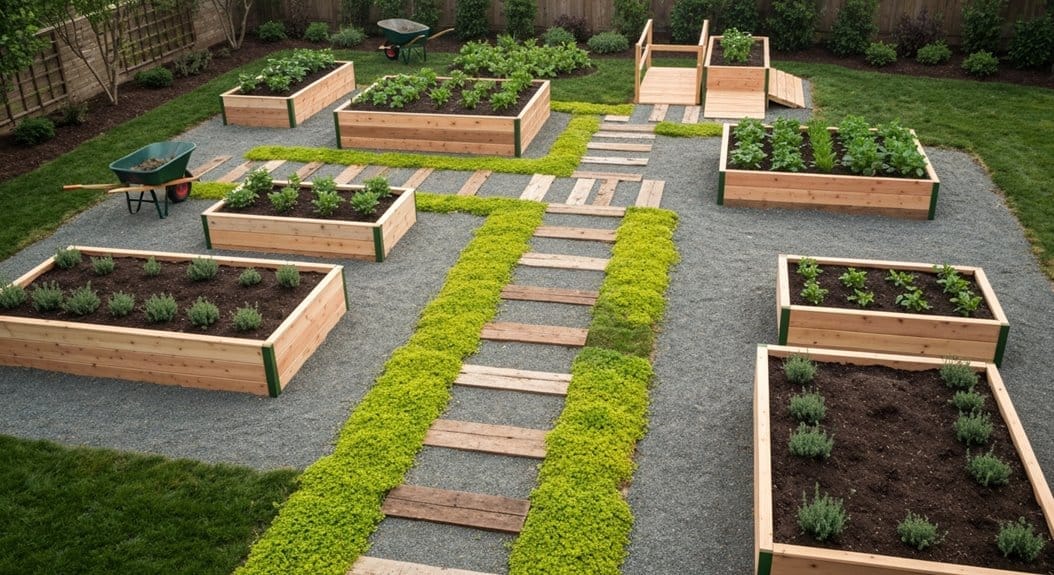
For ultimate garden utility, aim for raised garden bed pathway width of 3 to 4 feet. This allows you to easily push a wheelbarrow loaded with soil or debris past the bed without brushing against the plants.
If the space is only for occasional foot traffic—perhaps the path between a shed and a bed—you can safely narrow it to 2 to 3 feet. Having sufficient spacing prevents soil compaction outside the beds, which helps maintain overall site drainage.
As for a surface, consider installing pea gravel or decomposed granite. These materials keep things firm underfoot, reduce mud, and allow for better water infiltration than solid concrete paths.
Choosing Materials and Planning for Longevity
While the dimensions are vital, the material you choose heavily influences how long your beds last and their final cost. Think of your choice in terms of longevity versus initial budget.
For example, cedar is beautiful and rot-resistant, offering a great middle ground in terms of cost and lifespan. Conversely, untreated pine will decompose much faster. On the higher end, galvanized, metal-walled kits offer superb durability, often lasting decades.
When planning your layout, sketch it out first. Standardizing the dimensions based on readily available materials (like 8-foot long boards) minimizes cuts and waste. Think of these beds as permanent fixtures in your landscape!
Frequently Asked Questions
How wide should a raised garden bed be to reach the middle?
Ultimately, a raised bed should never be wider than 4 feet if you need access from both sides. This ensures that the center is easily reachable without having to step inside, which would compact your lovingly prepared soil.
What is the best soil depth for vegetables in raised beds?
For most common vegetables, an ideal raised bed soil depth is between 12 and 18 inches. For deep-rooted crops like carrots, potatoes, or squash, you should aim for 24 inches to allow roots to develop fully.
What is the ideal spacing between raised garden beds for a wheelbarrow?
To comfortably use a wheelbarrow, you need plenty of room to maneuver without crushing your foliage. Aim for a raised garden bed pathway width of 3 to 4 feet between beds for easy access, loading, and unloading.
Can I build raised beds directly on top of sod or grass?
Yes, you absolutely can build directly over existing grass. It’s best practice, however, to either remove the sod layer first or lay down thick layers of cardboard or newspaper underneath the bed before filling with soil. This smothers the grass and gives you a cleaner start.
How soon can I plant after filling new raised beds with soil?
If you fill your beds with a high-quality soil mixture (topsoil, compost, aeration), you can usually start planting within a week. The main consideration is ensuring the soil has settled and that moisture levels are appropriate for your chosen seedlings.
What materials are safe for raised bed liners against root zones?
When lining beds to prevent weed or pest intrusion, stick to barrier materials that won’t leach chemicals. Safe options include landscape fabric, cardboard (which breaks down beautifully), burlap, or if you are worried about burrowers, use stainless-steel mesh.


