Tag companion planting

Master Companion Planting: Science for Garden Success
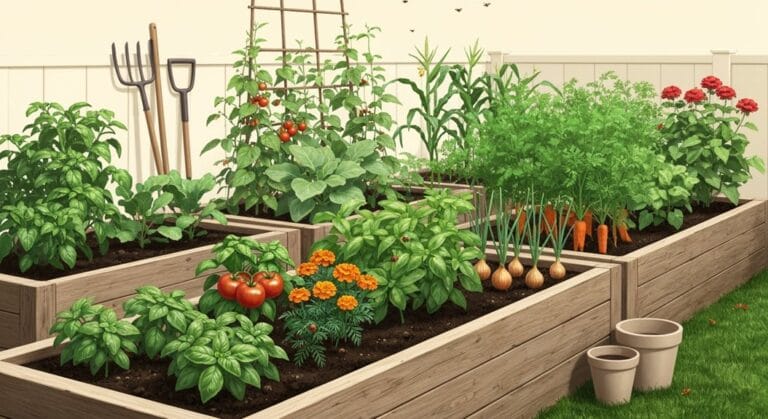
companion planting that works

Companion planting is the science-based practice of growing mutually beneficial plant combinations to enhance pest control, soil health, and pollination. Legumes fix nitrogen for heavy feeders like tomatoes, while trap crops like nasturtiums divert aphids and marigolds suppress nematodes. Strategic pairings maximize nutrient uptake and attract pollinators. Read on to discover proven charts and plans.
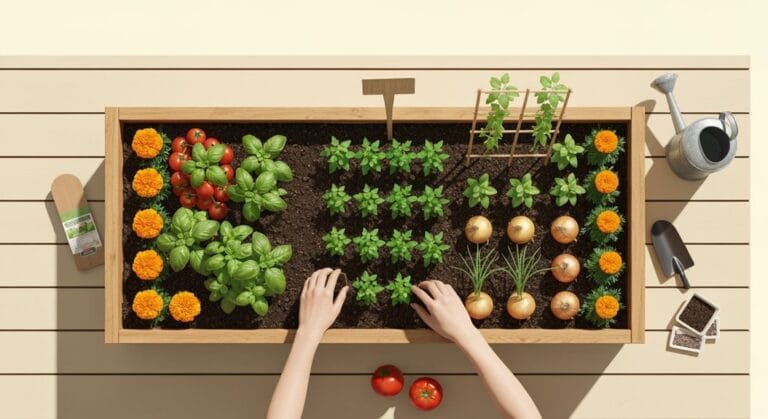
Raised-Bed Companion Planting: A Simple Step-by-Step Guide

raised bed companion planting guide

Raised-bed companion planting transforms a standard 4x4 foot garden by mixing tall and short crops on a 1-foot grid to maximize yield and minimize pests. By pairing nitrogen-fixing legumes with heavy feeders and using square-foot spacing—placing one tomato per square foot compared to sixteen carrots—you create a resilient microclimate that outperforms monoculture rows. Read the full guide to master specific plant combinations and seasonal rotation schedules.

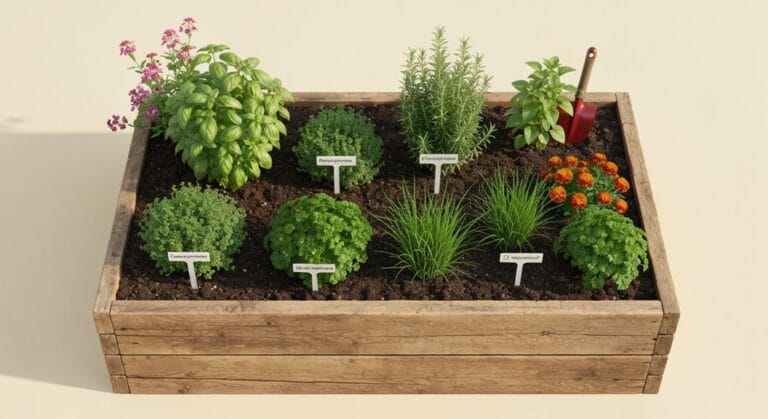
Easy Companion Planting Guide for Herb Beds

easy herb companion guide

Build a thriving herb bed by grouping Mediterranean herbs (rosemary, thyme, oregano) in dry zones and moisture-lovers (basil, chives, cilantro) in damper spots, then add calendula or nasturtiums to attract beneficial insects and trap pests naturally. This companion planting approach reduces pest pressure compared to single-herb plantings while improving soil health through diverse root depths and nitrogen-fixing plants. Space compact herbs 6 inches apart, medium herbs 12 inches, and large spreaders 18–24 inches for optimal growth. Read the full guide to master specific pairings and maintenance routines that keep your herb bed productive year-round.