
If you’re ready to elevate your growing game from simply planting things near each other to creating a thriving, self-regulating garden ecosystem, you’re in the right place. We’re diving deep into companion planting—not the fuzzy folklore, but the proven science behind effective plant pairings that boost yields, manage pests, and build incredible soil health.
Forget hoping for the best. We’re implementing strategies based on what actually works, whether you’re tending a city plot or a sprawling backyard. This isn’t about magic; it’s about smart gardening as part of a robust integrated pest management gardening system.
Key Takeaways for Effective Neighborly Gardening
- Plant nitrogen-fixing cover crops like clover or vetch in or beside beds to naturally feed heavy feeders in your rotation.
- Use trap crops (sacrificial plants) and strategic borders to divert common pests away from your main crops.
- Interplant clusters of flowering companions—think zinnias or sweet alyssum—to provide continuous forage for pollinators and beneficial insects.
- Combine species with deep and shallow roots to maximize nutrient uptake across different soil layers, which improves overall structure.
- Apply companion planting principles as one layer of your overall pest strategy, never as a replacement for good monitoring or soil care.
The Science Behind Effective Plant Pairings
Do you want your garden to feel less like a chaotic free-for-all and more like a small, highly efficient ecosystem? That’s the goal of intentional companion planting.
When you design pairings correctly, you create synergy: one plant feeds its neighbor, another draws in helpful allies, and a third improves the physical environment for everyone. It’s plant cooperation at its best.
For instance, intentionally plant a row or two of legumes—like peas or beans—per bed. These amazing plants partner with soil microbes to execute nitrogen fixation, basically creating free fertilizer for the hungry tomatoes or corn planted nearby. You might even use clover as a green manure cover crop to build valuable organic matter between seasons.
Another powerful strategy involves root architecture. Mix species with deep roots alongside those that only scratch the surface. This dual action ensures that nutrients and water are accessed and recycled from multiple soil strata, fluffing up the soil naturally.
Even in dense urban agriculture settings, this polyculture spacing is fantastic. It helps conserve moisture and interrupts disease pathways that thrive when monocultures are packed too tightly.
The result? Healthier plants, potentially stronger yields, and certainly happier gardeners!
Companion Strategies for Pest and Disease Control
Think of the companion planting approach to pest control as assembling a tiny neighborhood watch team right in your vegetable patch.
Some neighbors are designed to be distracting decoys, while others actively recruit the good guys—the predators and parasitoids. We use trap crops, which are plants pests prefer over your main harvest.
Nasturtiums, for example, are famous aphid decoys. You’ll also want repellent herbs like marigolds or alliums near vulnerable rows. And if you’re dealing with soil-borne evils, planting marigolds throughout your beds can significantly help reduce nematode damage control.
Treat your garden like a neighborhood watch: use sacrificial trap crops and repellent herbs to redirect pests and recruit helpful predators
When you integrate aromatic companions like dill or fennel, you invite parasitic wasps—tiny powerhouses that manage various caterpillars right out of your space.
Here are a few core ideas for pest diversion:
- Plant trap rows (nasturtium, mustard) near vulnerable beds to sacrifice for the greater good.
- Interplant dill or fennel to summon beneficial wasps and ladybugs to police the area.
- Use physical barriers like row covers or monitoring signs like sticky traps early in the season before the biological controls take over.
Using Legumes, Cover Crops, and Green Manures to Improve Soil
Now that you have your pest patrols organized, let’s focus on feeding the foundation: your soil. Soil feeding is just as important as plant feeding.
This is where nitrogen-fixing cover crops shine. When you plant legumes like vetch, clover, or sunn hemp, they pull atmospheric nitrogen down into the soil via specialized root nodules. This process is vital for long-term fertility.
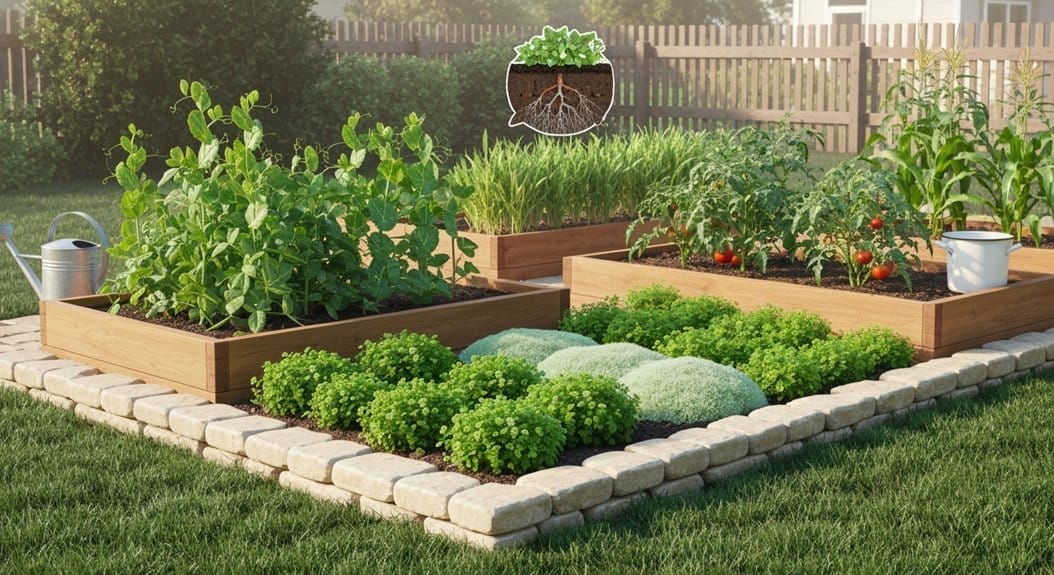
A general rule of thumb is that about half of the nitrogen “fixed” becomes available to the next crop after you incorporate the green manure back into the soil. This can significantly cut down on your need for external fertilizers.
To maximize soil benefit, mix your legumes with things like grasses or brassicas. This combination creates incredible biomass, reducing erosion, boosting organic matter levels, and breaking up compaction caused by heavy rain or foot traffic.
Just remember that fixation needs happy soil, too! You need adequate moisture and the right pH for those little Rhizobium bacteria to do their magic.
Designing for Pollinators and Beneficial Insects
A garden that produces well is a garden that gets visited often by bees, butterflies, and the predatory insects that keep pests in check. You don’t need to revert to wilderness to achieve this; you just need mindful design.
When selecting plants, lean toward native wildflowers or single-petal varieties like zinnias and sweet alyssum over highly bred, “fluffy” ornamentals that may lack nectar. Clustered blooms are key because they make efficient refueling stations for busy pollinators.
Design for pollinator diversity—plant zinnias, marigolds, sweet alyssum and perennials; cluster blooms
We need to make sure the food supply never runs out. This means staggering bloom times so there’s always something flowering from spring thaw until the first hard frost.
These “banker” plants sustain beneficial predators even when their primary pest targets are low. Research has backs this up, showing that welcoming these visitors can measurably increase yields in crops like cucumbers and peppers.
- Plant staggered bloom times to ensure continuous forage throughout the growing season.
- Add perennial banker plants to sustain predator populations year-round where possible.
- Include native wildflower mixes to support local insect species richness.
Practical Garden Plans and Companion Planting Myths to Avoid
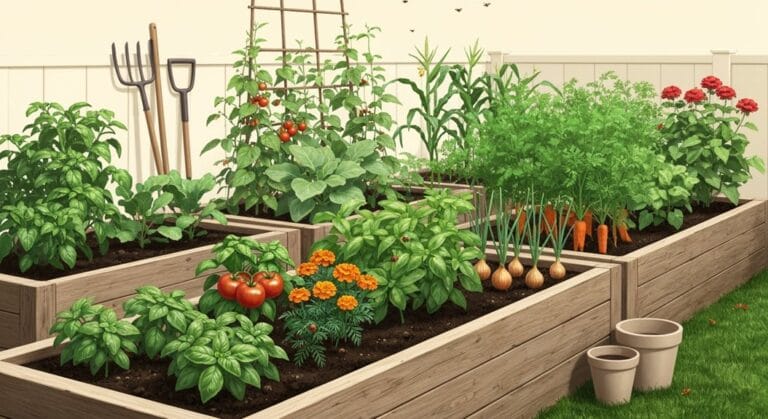
Your garden plan should feel organized, not overwhelming. A great starting point often involves pairing classic neighbors: basil next to tomatoes, peppers next to borage, and maybe calendula tucked into corners for general pest mitigation.
The synergy between tomatoes and basil, for example, is often credited with repelling pests like hornworms while potentially enhancing the tomato’s flavor profile. It’s a straightforward win.
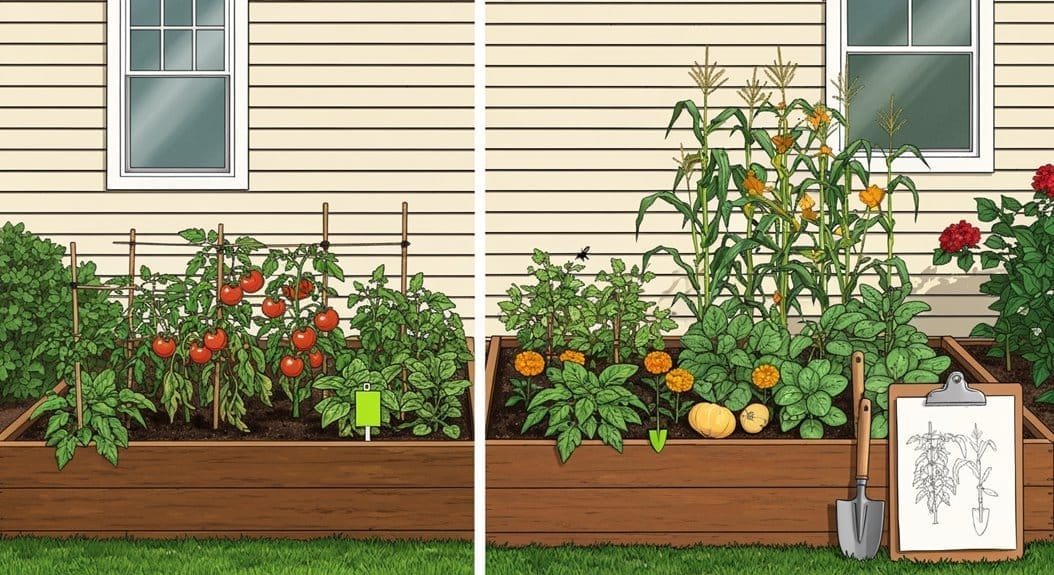
However, you must respect spacing, even when practicing intensive gardening like in raised beds or square-foot styles. If your lettuce needs 4 inches and your squash needs 18 inches, don’t cram them until they are stressed—stress invites bugs!
Let’s talk myths. The biggest one is relying solely on companions for pest defense. Companion planting is a fantastic, proactive tool, but it must work alongside other measures within your integrated pest management gardening plan, such as physical barriers or monitoring.
Also, be aware that not all neighbors are helpful; some plants aggressively compete for resources. Always research to avoid known antagonistic pairings.
Frequently Asked Questions
How to apply companion planting in containers or small balconies?
Applying companion planting in containers follows the same rules but requires tighter consideration of root space and watering needs. Focus on combining plants that share the same light and water requirements. Use taller plants toward the back (sun-facing side) and interplant compact flowering herbs or flowers around the edges. Harvest frequently to prevent overcrowding.
Will companion plants change the flavor or nutritional value of my crops?
Yes, sometimes you notice subtle flavor changes! When companions reduce plant stress, improve soil nitrogen levels, or keep pests away, the resulting produce is often healthier and, yes, tastier. It’s an indirect nutritional benefit resulting from overall vigor.
Can I reliably save seeds from plants grown in mixed beds?
Generally, no, you should not rely on seed saving from mixed beds unless you are dealing with absolute self-pollinators (like beans or tomatoes grown true-to-type). Isolation is key for genetic purity. While companion planting helps yields, it complicates seed saving purity due to potential cross-pollination.
Do companion plants increase overall water or nutrient competition?
They can, especially if you over-plant or choose species with very high, similar water needs. This is why combining deep-rooted species with shallow-rooted ones works so well—they aren’t fighting over the exact same few inches of soil. Careful monitoring of soil moisture is necessary in dense plantings.
How should I adjust planting times for companions with different maturity rates?
This requires scheduling, much like choreographing a dance! Start the slow-maturing plants first, and stagger the fast-maturing crops several weeks later. As the quick crops finish, their space opens up just as the slower crops are entering their heavy-feeding phase, ensuring continuous resource use rather than competition.
Conclusion: Making Companion Planting Practical
The core lesson here is that companion planting isn’t a single magic bullet; it’s a system of smart interactions. By planting legumes near heavy feeders, you can demonstrably cut fertilizer needs by a significant percentage, saving you time and money.
My own success story came when I added basil and marigolds to a struggling tomato patch—it wasn’t instantaneous perfection, but the boost in health was undeniable. Start small, observe your garden weekly for pest signs, and be ready to swap out combinations that aren’t performing.
- Start small, perhaps with just one dedicated bed using established pairings.
- Ensure you include your nitrogen-fixing superstars (peas, beans, clover).
- Monitor pest activity religiously rather than relying on assumptions.
- Incorporate successful pairings into your annual crop rotation plan.
- Test your soil annually to ensure your fertility foundation is solid.