
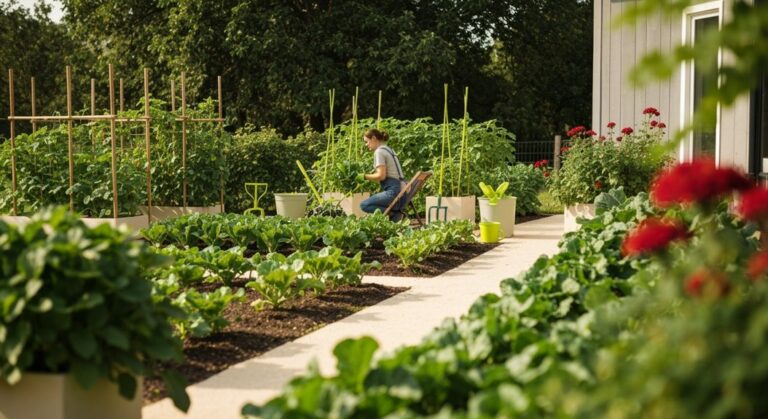

Let’s face it: figuring out where to put your vegetable garden sunlight needs can feel like detective work. If you’ve ever peeked out and thought,
While we all wish we had acres of uninterrupted midday rays, the reality for many of us is dealing with fences, trees, or maybe just a less-than-ideal balcony. But here’s the good news—you absolutely don’t need a desert climate to grow fresh veggies!
We are going to dive deep into
Why Sunlight Is the Secret Sauce for Vegetable Success
Sunlight isn’t just for tanning; it’s the essential ingredient that determines the health and harvest of your plants. Without it, things get dull fast.
The magic word here is photosynthesis. This is the critical process where plants transform light energy into the food they need to grow strong stems, lush leaves, and, eventually, delicious produce. Think of it as their solar-powered kitchen!
For the vast majority of vegetables we love to eat, they demand a solid six hours of direct sunlight daily just to keep up with maintenance.
Insufficient sunlight leads to weak plants and pale leaves, while some thrive on less, others, like eggplants, demand more sun.
When your plants don’t get that energy boost, they get leggy, pale, and frankly, look rather depressed. Understanding this relationship is the first step toward successful
Decoding the Hours: How Many Hours of Sun Does a Garden Need?
The difference between a blockbuster harvest and a sad scattering of greens often comes down to counting hours. We can generally categorize sunlight based on what most crops require for peak performance.
For those big producers—the tomatoes, peppers, and squash—you need what’s called “full sun.” This means a minimum of 6 to 8 hours of uninterrupted, direct sunlight every single day. If you’re growing my favorite, the eggplant, aim for 8 hours or more!
However, if you find your plot lands in the “partial shade” category—receiving between 2 and 6 hours of light—you aren’t stuck. This range is perfect for many leafy greens and some root crops.
Here’s a quick cheat sheet on the light spectrum:
- Full Sun (6+ hours): Ideal for fruiting vegetables (tomatoes, cucumbers, squash).
- Partial Sun/Shade (4–6 hours): Great for most leafy greens and some root crops.
- Full Shade (Less than 2 hours): Generally unsuitable for crops, except for some very shade-tolerant herbs.
If your garden gets less than two hours, you’ll be facing a serious challenge. That’s deep shade, and it severely limits what you can successfully grow.
You Can Still Grow Food: Vegetables That Grow in Shade
This is where the fun begins! Even if your space is mostly shadowed, you can still cultivate a wonderful harvest. I remember trying to grow zucchini on the north side of my shed one year—nope! But relocating my lettuce there? Instant success.
The key is knowing which crops are happy with less light. When we talk about vegetables that grow in shade, we are usually focusing on plants that primarily produce leaves or roots, rather than fruit.

For those areas receiving 4–6 hours of light, you’ve got winners!
- Leafy Greens: Lettuce, spinach, and Swiss chard happily produce leaves without scorching under intense sun.
- Root Crops: Carrots, radishes, and beets can manage with slightly less light, though their roots might be smaller than their full-sun counterparts.
- Herbs: Many popular cooking herbs are shade-tolerant heroes. Think mint, chives, parsley, and cilantro. They often prefer cooler, shaded conditions anyway!
Just keep in mind that while you can grow them, yield expectations need adjusting. A plant needing 8 hours might produce 10 tomatoes in full sun, but perhaps only 3 or 4 in that 5-hour zone. That’s the trade-off for gardening in limited light!
Planting by the Sun: Strategies for Maximizing Sunlight in Your Garden
Once you understand the sunlight your space gets, you must plan accordingly. Don’t plant a tomato where the afternoon shadow hits at 3 PM. Map your light!
When planning your vegetable garden according to light, always assign your sun-hungry crops to the brightest spots. They should get priority access to those glorious 6-8+ hours.
Considering sunlight exposure is crucial for a successful vegetable garden; it can significantly impact your harvest.
As for the shadier corners? That’s prime real estate for those shade-tolerant herbs like mint and parsley, which usually only need 2 to 4 hours.
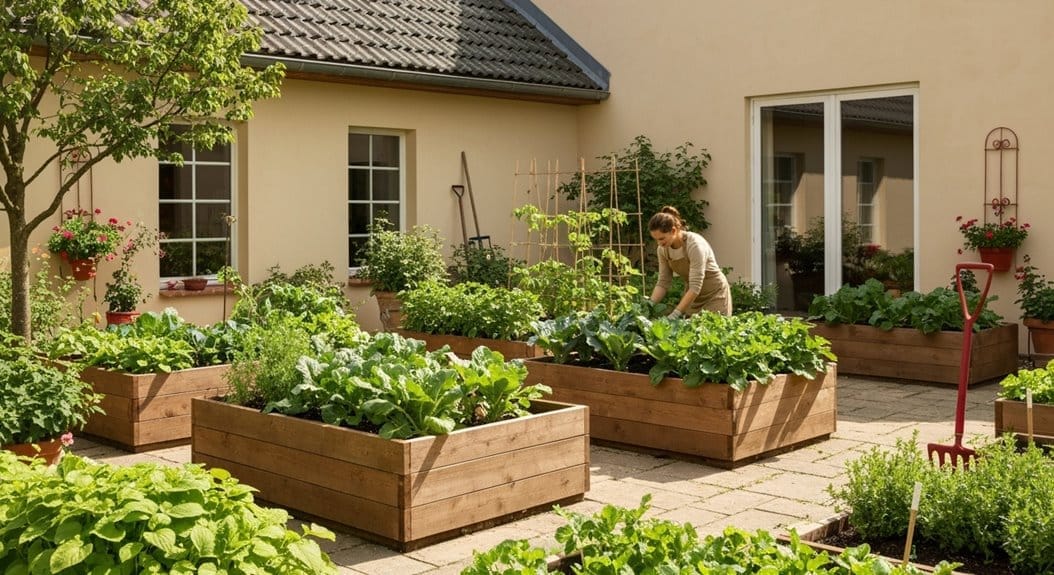
But what if you’re worried about the shadows cast by your own house or fence? We can fight back against the shade using a few clever tricks. These are fantastic strategies for maximizing sunlight in the garden:
- The Sun Tracker Method: Spend a day or two just observing. Note where the sun hits at 9 AM, noon, and 4 PM. This tells you the actual sun exposure, which changes throughout the season.
- Strategic Placement: Place tall crops (like corn or staked tomatoes) on the north side of your beds so they don’t cast shadows on shorter plants to the south.
- Reflect the Light: This is my favorite sneaky trick! Place light-colored mulch, white painted stakes, or even strategically positioned mirrors (if you’re careful!) to bounce available light onto the shadier parts of your plants.
- Mobility is Key: If your garden is in containers, embrace it! You can literally follow the sun around your yard as the season progresses.
Spotlight on Shade Lovers: Best Low-Light Varieties
To really beat the shade game, we need to talk specifics. Not all lettuces are created equal, and choosing the right cultivar can drastically improve your gardening in limited light results. This addresses the content gap regarding specific varieties.
For lettuce, look for loose-leaf varieties over tight heads, as they often mature faster. For example, ‘Black Seed Simpson’ or ‘Buttercrunch’ are known to handle less light well. If spinach is your goal, ‘Bloomsdale Long Standing’ performs admirably even when it’s not getting that ideal 6 hours.
When it comes to root crops, since the sun fuels the top growth which then feeds the root, success is often about patience. Look for quicker maturing radishes like ‘Cherry Belle’—they race through their cycle before the shade becomes an issue. For carrots, thinner, shorter varieties might do better than massive storage roots.
- Best Spinach Varieties for Shade: ‘Bloomsdale Long Standing’, ‘Tyee’.
- Shade-Tolerant Lettuce: ‘Black Seed Simpson’, ‘Oakleaf’ types.
- Quick-Maturing Roots: Small, round radishes beat long, deep carrots in low light.
Frequently Asked Questions on Vegetable Garden Sunlight Needs
Is 5 Hours of Sun Enough for a Vegetable Garden?
Five hours of sun is a decent start for some crops. It’s usually enough to happily grow most leafy greens like spinach and some herbs. I’ve successfully grown radishes in that light, but for fruiting types, you will definitely see a major drop in yield.
How Much Sun Does a Food Garden Need?
Generally speaking, a productive food garden needs at least six hours of direct sunlight daily for the best results across the board. Without that, you are moving into the specialized category of vegetables that thrive on less.
Is It Possible to Grow Food Without Direct Sunlight?
It is possible to grow *some* food without direct sunlight, but it requires very specific choices. Herbs like mint and parsley, and lettuces, can survive and produce usable amounts with only 2 to 4 hours of light. For anything else, you’ll likely need supplemental grow lights.
What Happens if Your Vegetable Garden Doesn’t Get Enough Sun?
If your vegetable garden doesn’t get enough sun, the plants focus all their limited energy on growing tall and thin instead of wide and productive. This results in weak stems, pale green or yellowing leaves, and significantly reduced fruit or vegetable output—sometimes none at all.
Embracing the Shadows: Your Bountiful Low-Light Garden Awaits
Think of your garden, whether it’s sun-drenched or slightly shadowed, like a sunflower seeking the best possible light source. Success isn’t just about having eight hours; it’s about understanding your specific vegetable garden sunlight needs and adapting.
For those of us dealing with the partial shade reality, remember that selecting the right plants—like hearty spinach or quick radishes—is half the battle. Combine smart planting with those light-boosting tricks we discussed, and you’ll see results.
Don’t let shadows keep you inside. Get creative, know your hours, and enjoy the satisfying bounty that even a limited-light plot can produce!
