
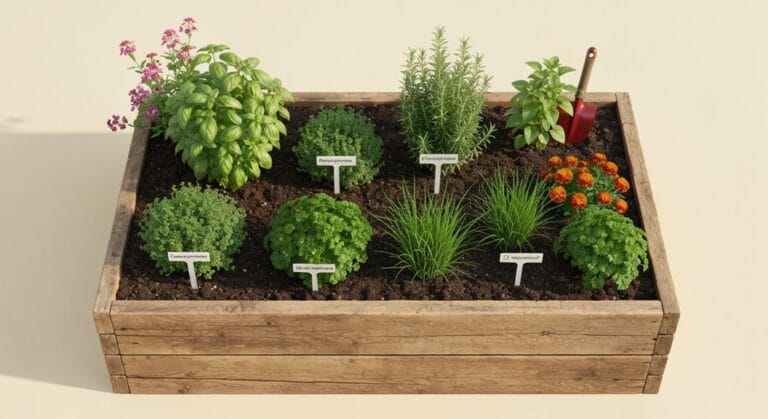

I’ve learned that growing herbs doesn’t have to be complicated. In fact, the easiest way to succeed is to plant them with intention—grouping Mediterranean herbs together, keeping moisture-lovers in their own zone, and adding a few strategic flowers to handle the pest control for you.
The result? A thriving herb bed that practically takes care of itself.
Key Takeaways
- Use aromatic herbs (basil, rosemary, lavender) to repel pests and attract beneficial insects for natural pest control.
- Group herbs by water and sun needs: Mediterranean together, moisture-lovers (basil, chives, coriander) in richer, damper spots.
- Add pollinator- and predator-attracting flowers (calendula, borage, alyssum) and trap plants (nasturtium) to protect herbs.
- Plan layout with staggered spacing: tall herbs (rosemary, sage) at back/center, low thyme and marigolds as borders.
- Maintain by rotating crops, pruning before frost, containing mint, mulching, and sanitizing tools to prevent pests and disease.
Why Companion Planting Works for Herb Beds
When you plant herbs together on purpose, you’re not just being cute—you’re building a small ecosystem that does a lot of the heavy lifting for you.
Plant herbs together and you create a tiny ecosystem that does much of your gardening work.
Here’s what happens: aromatic herbs like basil and rosemary create natural pest barriers that deter aphids and moths. At the same time, you invite beneficial insects like ladybugs and lacewings to move in. These little helpers eat the pests, so you don’t have to.
The soil improves too. Deep-rooted herbs recycle nutrients, and nitrogen-fixing plants feed the soil naturally. It’s biodiversity at work.
One quick myth to debunk: companion planting isn’t just folklore. It has real historical roots in practical farming. The key rule is simple—pair plants with diverse root depths and bloom times. Just watch out for allelopathic conflicts (that’s when one plant actually poisons the soil for another, but it’s rare with herbs).
Best Herb Pairings and Plant Roles
Now that you understand the “why,” let’s talk about who actually gets along. Think of it like a dinner party—some guests complement each other, while others need their own space.
Mediterranean herbs like rosemary, thyme, oregano, and lavender love sun and dry soil. I always group these together because they have nearly identical needs.
Moisture-lovers like basil, chives, cilantro, and mint prefer richer, damper spots. Keep them separate from the Mediterranean crew or they’ll compete for water.
Here’s a practical pairing tip: oregano’s peppery scent actually deters aphids. Dill and cilantro attract beneficial insects like ladybugs and tachinid flies. Parsley plays well with sage and chives, but I always keep aggressive mints contained—they’ll take over if you let them.
When you’re planning your harvest, think about flavor synergy too. Complementary tastes grow well together, and you’ll have natural flavor combinations ready to pick.
Flowers and Vegetables That Support Herbs
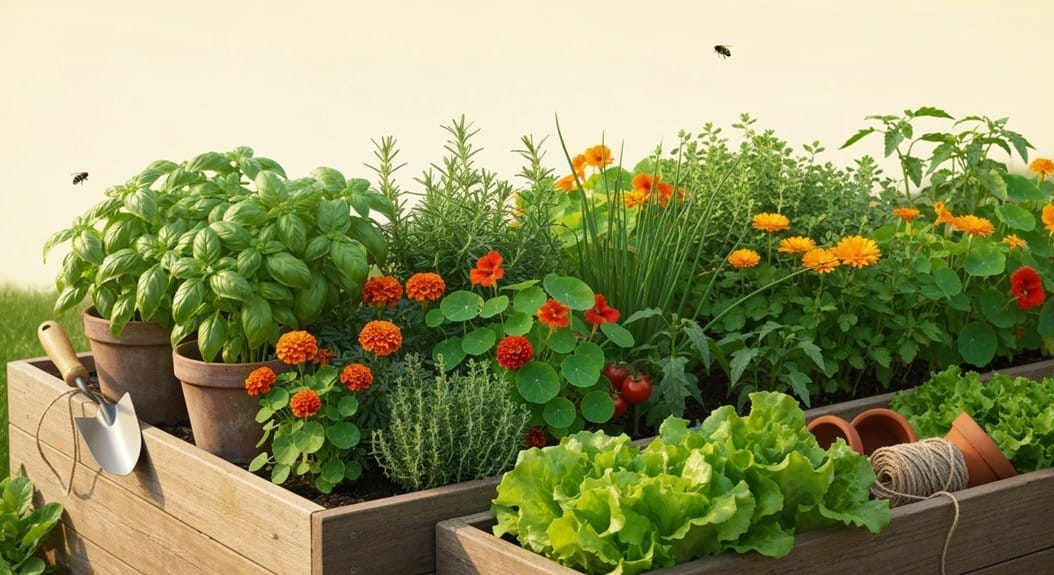
A few well-chosen flowers can transform a plain herb bed into a buzzing, low-maintenance micro-ecosystem.
I plant calendula, lavender, and marigolds to attract bees and beneficial insects. Nasturtiums and nicotiana work as trap plants—they lure pests away from your herbs so the herbs stay healthy.
If you have space, add beans or peas to fix nitrogen in the soil. Dill and parsley draw predatory insects that keep pest populations down.
Pay attention to color and fragrance too. Bright nectar guides and consistent scents help bees and butterflies find your herbs faster. The more pollinators you attract, the better your herbs perform.
Planting Layout, Spacing, and Root Depth Tips
Why cram herbs together when a little planning gives you a thriving, low-maintenance bed? Start by sketching your layout using a staggered or hexagonal grid—it saves space and improves light distribution.
Plan your herb bed: sketch a staggered layout, group by size and water needs for low‑maintenance harvests.
Here’s my layout strategy:
- Place tall herbs (rosemary, sage) at the back or center so they don’t shade smaller plants.
- Border with low-growing thyme and marigolds for a finished look.
- Match water needs and group shallow-rooted herbs together, keeping deep-rooted plants separate to respect soil layering.
For spacing, use these guidelines:
- Compact herbs (thyme, oregano): 6 inches apart.
- Medium herbs (basil, chives): 12 inches apart.
- Large spreaders (rosemary, sage): 18–24 inches apart.
One important note: contain mint. Seriously. Mint spreads underground and will take over your entire bed if you’re not careful. I use a pot within the bed or a physical barrier to keep it in check.
Maintenance, Pest Control, and Seasonal Care
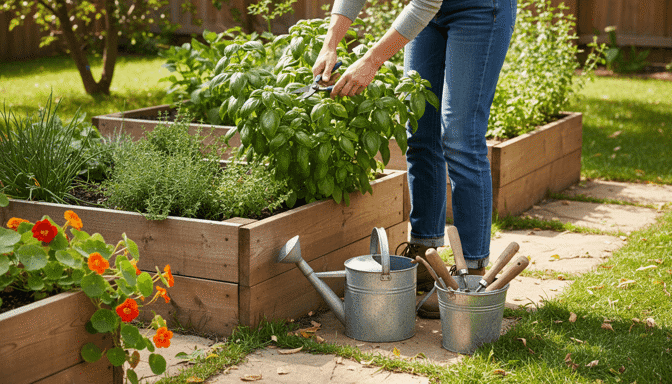
Once your layout is set, keeping the bed productive is mostly about steady, sensible care rather than frantic firefighting.
Here’s my simple maintenance routine:
| Task | Timing |
|---|---|
| Prune | Before frost |
| Mulch | Fall and spring |
| Rotate | Yearly |
| Divide | Fall |
I prune before frost to encourage new growth and remove diseased material. Mulch helps retain moisture and regulates soil temperature. Rotating crops yearly prevents pest and disease buildup.
Use aromatic companions to repel pests naturally. Practice strict tool sanitation—clean your pruners between cuts to stop disease from spreading. If you have tender herbs, bring them indoors before the first frost.
I’ve found that short weekly checks save seasons of heartache. Spend 10–15 minutes walking through your bed, noting changes, and tweaking companions. It’s the difference between a thriving garden and one that struggles.
Frequently Asked Questions
How Do I Harvest Herbs to Maximize Regrowth and Flavor?
Harvest herbs in morning with harvest timing just before full bloom, pruning methods that pinch above leaf nodes and remove one-third growth; you’ll encourage regrowth, preserve flavor oils, and have plenty to share with others.
Can I Grow Herb Companions in Containers or Small Balconies?
Yes, like a tiny kitchen, you’ll use careful container selection and balcony spacing to plant compatible herbs; you’ll nurture them to share fresh flavors, repot aggressive varieties, and harvest frequently to serve guests aromatic dishes.
What Soil Amendments Best Suit Mixed Herb Beds?
Use balanced organic compost, worm castings and mulch, monitor soil pH regularly, and add limestone or wood ash to raise pH when needed; you’ll nourish plants and share abundant, healthy herbs with friends and community.
How Do I Dry or Preserve Surplus Herbs for Winter Use?
Tie bundles, hang bunches; air drying preserves flavor, freezing herbs locks freshness. You’ll dry in a cool dark spot, guarantee herbs crumble, or freeze chopped herbs in oil or ice cubes to serve winter meals.
Can Companion Planting Change Herb Essential Oil Concentrations?
Yes, companion planting can change essential oil concentrations; you’ll influence oil variability and aroma genetics through neighbors, pollinators, and soil microbes, so you can enhance aroma, potency, and the herbs you proudly share with others.
Conclusion
You can start companion planting even in a tiny pot. One to three herbs plus a flower will repel pests and enhance flavor within weeks.
Don’t worry if you lack time—10–15 minutes weekly is all you need. Try basil with tomatoes, chives with carrots, or marigolds on the bed edge. Start small, dream big, and watch your herb garden thrive.


