


Want steady, crisp romaine from your raised bed? I know I do! Romaine is a garden favorite, but it can be a little fussy about heat and timing. I’m going to share my best tips on when to plant, how to use shade, and how to space your plants for a reliable, non-bitter harvest every time.
Key Takeaways
- Timing is Everything: Start your seeds indoors 10–12 weeks before your last expected frost. I usually aim for late February or early March. Then, transplant them outdoors 1–2 weeks before that last frost date.
- Succession Sow: To avoid those annoying gaps in production, sow a new batch of seeds every 2–3 weeks. This keeps the crisp heads coming!
- Sunlight: Romaine needs about 4–6 hours of direct sun daily. In hot climates, this means morning sun and afternoon shade to prevent bolting.
- Spacing: Give those heads room to breathe! Plant them about 10 inches apart in your 36–48 inch wide raised beds. Staggering the rows helps with light and airflow.
- Water: Keep the top 1–2 inches of soil consistently moist. Drip irrigation and mulch are your best friends for conserving water and keeping the leaves dry.
Best Times to Sow and Transplant
Romaine is a cool-weather crop, meaning it loves spring and fall. To get a jump on the season, I start my seeds indoors about 10 to 12 weeks before the last expected spring frost. For me, that means sowing seeds around late February or early March.
Lettuce seeds actually germinate best around 75°F, and you should see little sprouts in just 3 to 4 days. I keep my seedlings under grow lights for about 4 to 6 weeks to make sure they get strong and sturdy before they face the elements.
The great news is that romaine is pretty tough! It can handle cool weather, so you can transplant those hardened seedlings outdoors 1 to 2 weeks before that last frost date. And remember that golden rule: succession sow every 2 to 3 weeks to keep those harvests rolling in.
Sunlight Requirements for Healthy Romaine
Romaine needs about 4–6 hours of direct sun a day, with 6 hours being ideal. This solid morning and mid-day light helps the plants form those full, crisp heads instead of getting leggy.
In cooler seasons, that 6 hours of sun is essential. But if you live in a hot climate (like I do during the summer), you need to be smart. Give your romaine the morning sun, but shelter it from the harsh afternoon heat. This partial shade is key to slowing down bolting—that’s when the plant shoots up a flower stalk and turns bitter.
When placing your raised beds, make sure the sun is unobstructed. I like to track the spots in my garden to ensure they get that consistent 5–6 hours. If you’re using containers, move them! Just remember: less than 4 hours of sun will result in less dense, floppy heads.
Partial Shade Benefits
Romaine’s sweet spot is cool, not scorched. Giving your raised beds some afternoon shade can make the difference between a crisp, sweet salad and a bitter disappointment.
While romaine can handle 8 hours of sun, it often tastes better and lasts longer if you aim for 4–6 hours of direct sun followed by filtered afternoon light. This slows heat stress and delays bolting.
I use shade cloth, but you could also place your bed on the north side of a fence or use tall companion plants for natural afternoon cover. The benefits are clear: cooler temps (below 80°F), better flavor because growth is slower, and an extended harvest.
Preparing Raised Beds and Soil Amendments
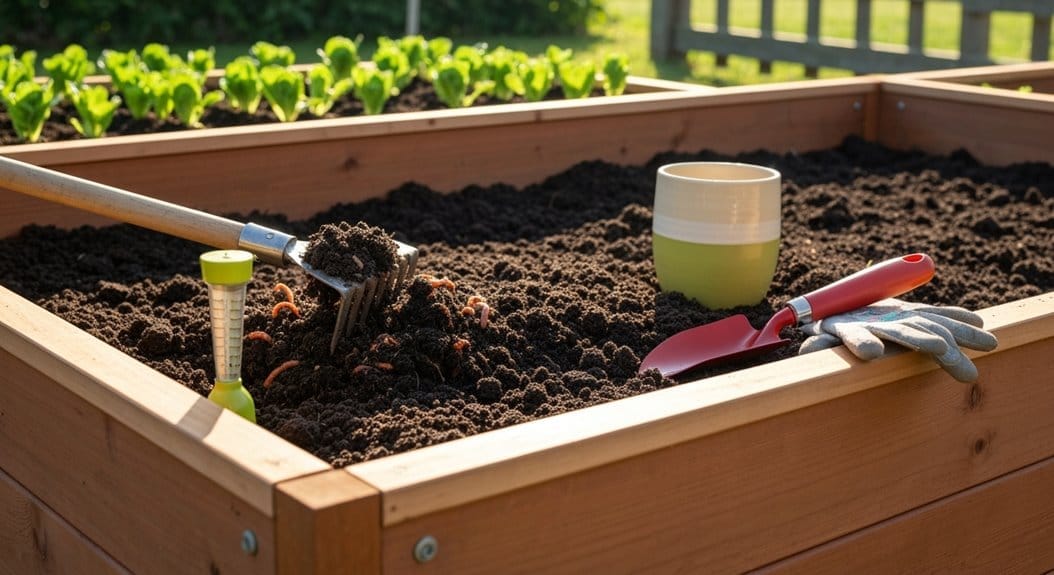
Before planting, I treat my raised bed like a blank canvas. Start by clearing and leveling it. I keep my beds 48 inches wide or less so I can easily reach the center without stepping on the soil.
Next, give your bed a big nutrient hug! I sprinkle and mix in 2–3 inches of finished compost. Finished compost is just fully broken-down organic material. This replenishes nutrients and feeds the microbes that keep your plants happy.
Then, loosen the native soil 2–6 inches deep until it crumbles easily. This sets a steady, well-drained foundation that makes everything—watering, feeding, and harvesting—so much easier!
Clear and Level Bed
You want your romaine to get off to a confident start. Use a spade or rototiller to loosen compacted soil to about 2 to 6 inches deep. The soil should crumble when you squeeze it, not turn into dust or sticky clumps.
Good bed leveling is important because it ensures consistent root depth and drainage. You want to avoid puddles and dry spots! Rake it flat, and make sure your planting surface is under 48 inches wide so you don’t have to step on it.
Add 2–3 Inches Compost
Spreading a uniform 2–3 inch layer of finished compost is one of the best things you can do for your lettuce. It’s like slow food for your plants!
Compost provides balanced, slow nutrient release and boosts the beneficial microbes in your soil. Just make sure your compost is mature (it shouldn’t smell bad or feel hot). A light topdressing also helps protect moisture, which is crucial in a raised bed.
| Benefit | What to expect |
|---|---|
| Nutrients | Balanced, slow nutrient release |
| Biology | More beneficial microbes |
Loosen Soil for Roots
You need to loosen the soil to at least 6–8 inches deep. Romaine roots need to go deep to find water without wrestling compacted dirt.
I use a spade or rototiller to relieve compaction. If you have heavy clay, tilling helps, but avoid over-tilling—we don’t want to hurt those beneficial microbes! I also mix about 30% organic matter into the bottom layer before leveling it all out.
Planting Layout and Spacing Strategies
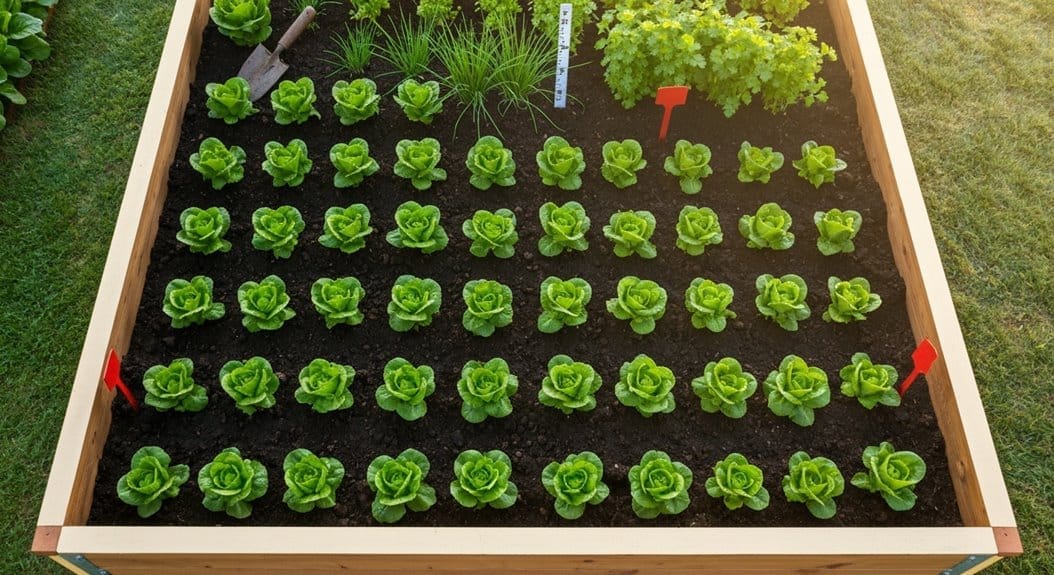
How close should you plant romaine? We want full, crisp heads, not a soggy salad soup!
I aim for about 10 inches between full-sized heads. This gives each plant plenty of air and room to form that crisp heart we all love.
Aim for roughly 10 inches between full-sized romaine heads for airflow and a crisp heart.
I like using a staggered grid or square-foot gardening layout (about four per square foot) for better airflow. This is especially helpful if you’re using drip irrigation. You can also try edge planting—placing lettuce along the bed borders where taller crops might cast some afternoon shade.
Watering, Moisture Control, and Irrigation
Ever wonder exactly how often to water your romaine so it stays crisp instead of sulking?
The key is to keep the top one to two inches of soil moist. Romaine has shallow roots, so it needs frequent, gentle watering, not deep floods. Since raised beds dry faster, you might need to check daily in the heat.
I highly recommend using drip irrigation on a timer. It provides steady moisture and reduces waste. Plus, it avoids overhead sprays, which wet the leaves and invite disease. Use mulch (straw or leaf mulch) to cut down on evaporation and keep the moisture even. invite disease. Monitor with a finger or moisture meter, adjust after rain or heat.
Managing Heat With Shade Cloths and Row Covers
When that midday heat threatens to push your romaine into bolt mode, a bit of shade is a lifesaver. It can be the difference between crisp heads and bitter, sad leaves.
I use a 30–50% knitted polyethylene shade cloth suspended above my beds. This can lower the temperature by 10–15°F, conserve moisture, and delay bolting.
Lightweight row covers (the spunbond kind) also offer a little shade (10–20%) and are great for blocking pests. Just make sure your covers are secured on hoops to allow airflow. Think seasonally: open them up in the mornings and shade them in the afternoons when the sun is harshest.
Frequently Asked Questions
What Romaine Varieties Are Most Bolt-Resistant?
Choose varieties with bolt resistance like Buttercrunch, Jericho, Coastal Star, Inferno, Stampede, Paris Island and Little Gem; your variety selection helps you provide crisp heads to others, and you’ll delay bolting consistently in warm seasons.
How Do I Prevent Slugs, Snails, and Common Pests in Raised Beds?
You’ll battle slugs like a superhero, you’ll stomp pests with kindness: use slug barriers, beer traps, nematodes and copper tape, encourage natural predators, keep beds tidy, water mornings, and cover seedlings to protect neighbors’ harvests.
What Fertilization Schedule and Nutrients Do Romaine Plants Need?
You should fertilize romaine at planting, feed seedlings every two weeks, then apply balanced fertilizer monthly, supplementing nitrogen; use soil testing to track macro nutrients, adjust amounts so you’ll keep plants healthy to serve others.
When and How Should I Harvest Romaine for Best Texture and Flavor?
Like a clock’s green hands, you’ll use harvest timing: cut outer leaves at three weeks, or whole heads at sixty-five to seventy days; you’ll note texture changes with heat, so pick in cool hours serving.
How Long Can Harvested Romaine Be Stored, and What’s the Best Storage Method?
You can store harvested romaine up to 21 days; storage duration depends on temperature, so use refrigeration methods like crisper drawer, perforated bags, or hydrocooling if available, and you’ll serve crisp, fresh heads to guests.
Bottom line
You can absolutely grow crisp romaine in your raised beds! Just remember the key steps: sow in cool weather, give it 6 hours of sun (and afternoon shade when it’s hot), amend your soil with 2–3 inches of compost, and water consistently. I once saved a wilting patch with a shade cloth—it was a miracle-level save, honestly. Follow these clear rules for timing, light, soil, moisture, and shade, and enjoy crunchy salads all season long!


