
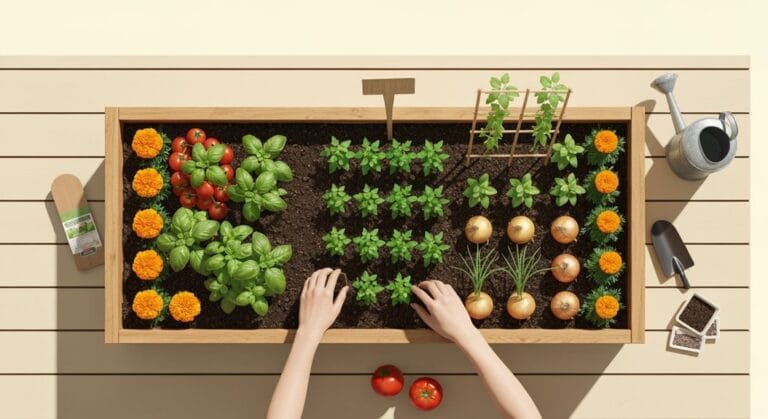

Think a small bed can’t beat pests? I used to think the same thing. But I’m here to tell you that you can transform a simple 4×4 bed into a resilient, high-yield microgarden.
The secret sauce is companion planting. By mixing tall and short plants, tucking nitrogen-fixing legumes beside hungry vegetables, and edging your beds with nectar-rich flowers, you create a system that practically takes care of itself.
Raised Beds Planting Layout & Rotation
You can turn a standard 4×4 raised bed into a low-pest powerhouse just by being smart about your layout. I like to mix plant families and interplant herbs or flowers (like marigolds and nasturtiums) to attract beneficial insects.
Here is my go-to strategy:
- Plan on a grid: I always plan my beds on a 1-foot grid. It makes the math so much easier.
- Watch the sun: Plant your tall crops on the north side so they don’t shade out the little guys.
- Square-foot spacing: Use the “square-foot” rule—one big tomato gets a whole square foot (ft²), while you can pack many carrots into that same space.
Also, pair plants by root depth. Put shallow greens beside deep-rooted vegetables so they aren’t fighting for space underground. And don’t forget to use edge plants like basil or garlic to mask scents and confuse pests.
Why Companion Planting Works in Raised Beds
Why does companion planting shine in raised beds?
Why does companion planting shine specifically in raised beds? It’s all about concentration. When you plant diversely, you create a microclimate buffer.
This basically means the dense leaves keep roots cooler and stop water from evaporating so quickly. Your plant health improves fast because the environment is more stable.
Diverse plantings buffer the microclimate—cooler roots, less evaporation, faster plant health gains.
It also reduces your reliance on chemical pesticides. By mixing legumes, deep-rooted herbs, and flowers, you feed a richer soil microbiome (that’s just the fancy term for the community of good bacteria in your soil). This enhances nutrient cycling—short for “better food for your crops.”
Start small. Try just 2–4 companion species per 4×4 ft bed, swap them annually, and watch how they interact.
Choosing Compatible Plant Combinations
When I plan combos in my raised bed, I think about three things: complementary nutrient needs, pest-repellent pairings, and root depth. Those three rules will save you a lot of headaches later.
Start small—try one combination per bed—and you’ll learn faster than any rule book can teach you. That’s the practical takeaway.
Complementary Nutrient Needs
If you want your raised bed to behave like a well-oiled team instead of a food fight, pick plants whose habits play nicely together. You don’t want two “root-heavy divas” fighting over the same dinner.
Think about nitrogen-fixers. Legumes like beans and peas actually pull nitrogen from the air and fix it into the soil. I always plant these near “heavy feeders” like corn, potatoes, or kale to give them a nutrient boost.
Also, use nutrient timelines. I stagger fast-growing lettuce with slow-growing carrots so they are using nutrients at different times.
Pest-Repellent Pairings
How do you turn a crowded bed into a fortress that bugs hate? Use intentional pairings.
I plant marigolds and nasturtiums along the edges. These act as trap crops—they lure aphids and nematodes away from your precious veggies. I also tuck chives, garlic, or basil near vulnerable plants to mask their scents.
Remember, this is an organic method. It avoids chemicals by using fragrance synergy to confuse pests and guide predators like ladybugs to the buffet.
Root Depth and Spacing
You’ve learned to pair plants for pest control—now let’s look beneath the surface. Matching root depths keeps plants from elbowing each other out of nutrients and water.
Raised beds give you great control over the soil. When you plan, check your drainage depth.
- Shallow greens: Need about 6″ of soil.
- Root crops: Need 10–12″.
- Deep crops: Need 12–18″.
I’ve seen beds flourish when you honor these root zones. Your neighbors will notice the difference, and you’ll feed more people from the same space.
Designing Your Raised Bed Layout
Why not start by thinking in squares? Use a 1-foot grid so the aesthetics and geometry guide your choices.
I usually place one tomato per square, but many carrots in another. I always put tall plants on the north edge to avoid shading the rest of the bed.
Add low border herbs to repel pests and invite pollinators. If you have climbers, trellis them at the back. Let trailing plants spill over the edges—it looks beautiful and saves space.
A quick personal note: I learned this the hard way when my first bed became a “tomato sea.” Proper spacing saved it the next year.
Planting Nitrogen-Fixers and Living Mulches
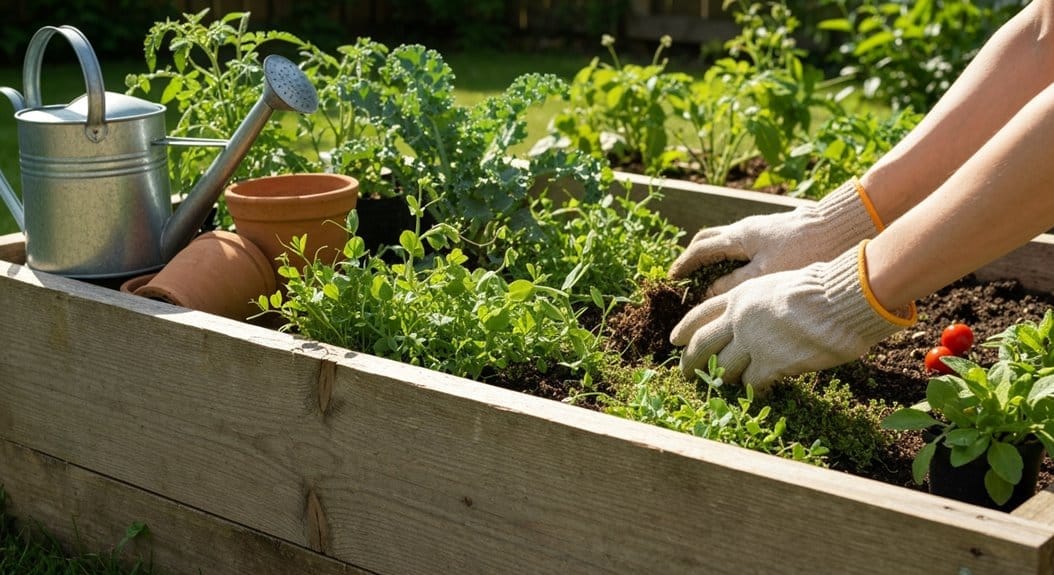
Where do you put the helpers? You’ll want to plant legumes (beans, peas, clover) beside those heavy feeders I mentioned earlier.
You can even use low clover as a living mulch under your vegetables. This works through rhizobium nodulation (bacteria in root nodules), which fixes nitrogen and reduces your need for fertilizer.
| Plant | Role | Placement |
|---|---|---|
| Clover | Living mulch | Between rows |
| Bush beans | Nitrogen fixer | Next to corn |
| Peas | Support & fix | Edges, trellis |
Just be sure to give them space so they don’t shade out small crops. Serve your plants and your neighbors by sharing nutrients—garden generosity grows!
Managing Pests, Diseases, and Trap Crops
Managing pests in a raised bed is mostly about stacking smart plants so nature does the hard work for you.
Think of flowers that feed beneficial insects, herbs that mask crop scents, and sacrificial trap crops that keep pests busy at the edges. You aren’t replacing care; you are guiding ecological interactions to tip the balance toward health.
How it works:
- Plant alyssum, dill, or fennel to attract parasitic wasps and ladybugs.
- Use sunflowers or mustard as sacrificial trap crops for stink bugs.
- Use basil and garlic to mask scents.
Seasonal Maintenance, Rotation, and Long-Term Care
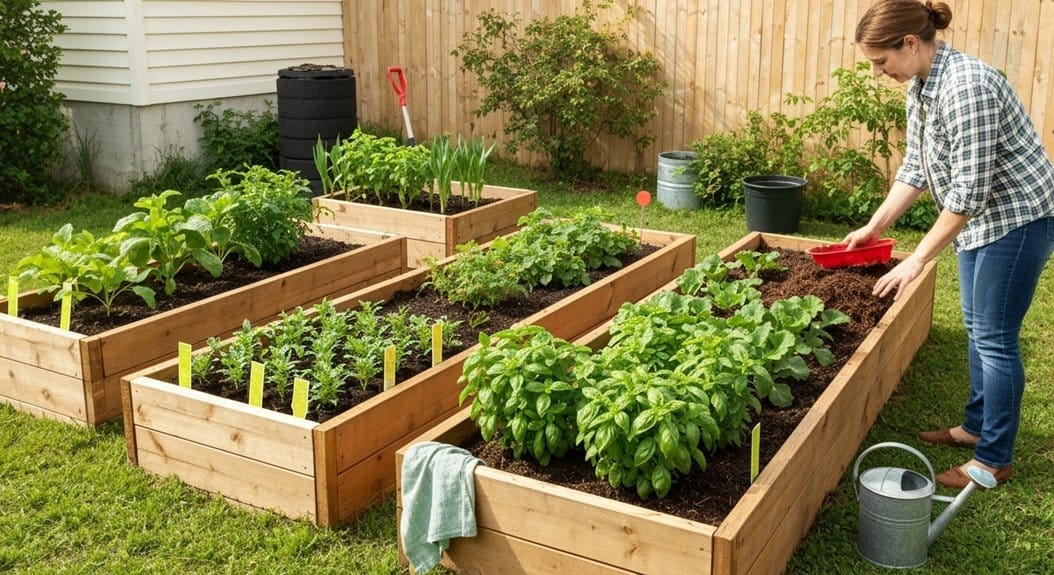
Think of a simple seasonal maintenance calendar you check weekly. Thin crowded plants, pinch herbs, deadhead spent blooms, and keep soil evenly moist.
For long-term health, crop rotation is key. If you plant deep-rooted nightshades (like tomatoes) this year, follow them with shallow-rooted legumes (beans) next year. This breaks pest cycles and balances nutrients.
Seasonal Maintenance Calendar
As the seasons turn, keep your beds healthy by following a simple rhythm:
- Spring: Debris removal, soil amendments, and early planting.
- Summer: Deep watering, weekly pest checks, and mulch top-ups.
- Fall: Add compost, plant a cover crop, and tidy up irrigation.
- Winter: Dormant pruning and tool care.
Crop Rotation Strategies
After the seasonal chores, give your soil a game plan for the next few years. I recommend a 3–4 year cycle to limit disease.
Try this simple plan:
- Year A: Legumes (Beans/Peas)
- Year B: Leafy Greens
- Year C: Roots (Carrots/Beets)
- Year D: Fruiting Vegetables (Tomatoes/Peppers)
Keep a journal and map your beds. It makes adapting to pest pressure so much easier.
Frequently Asked Questions
How Deep Should Raised Beds Be for Most Companion Planting Setups?
You’ll set raised beds about 8 to 12 inches deep so most companion plants thrive; that bed depth balances root spacing and soil volume, letting you grow healthier crops and proudly share harvests with others.
Which Soil Mix Ratios Work Best for Diverse Companion Plantings?
You’ll typically use a 2:1:1 mix (sandy loam:compost:perlite) or 50:50 topsoil:compost, adjusting grit for soil texture and pH balance; you’ll amend to support diverse companions and serve others’ shared garden needs with kindness and patience.
Are Any Companion Plants Toxic to Pets or Children?
Yes, many companion plants can be toxic to pets or children; you should prioritize pet safety and address toxicity concerns by removing dangerous species, choosing non-toxic substitutes, and educating neighbors so you’re protecting loved ones
What Materials Are Best for Building Durable, Non-Toxic Raised Beds?
Choose untreated hardwoods like cedar or stone, stainless steel, or durable wood alternatives like composite; line beds and use food-safe coating options so you’ll protect soil, plants, pets and serve others with safe, lasting beds.
Can Companion Planting Be Used With Perennial Vegetables or Herbs?
Yes imagine dusk settling as you plant: you’ll use seasonal guilds and evergreen companions to shelter perennials, and you’ll nurture neighbors, sharing blooms, pest control and soil health so others reap lasting abundance and joy.
Conclusion
You’ve got this. Mix compatible plants, add a nitrogen-fixer for a soil lift, and rotate your beds yearly to cut pests.
Don’t forget to use trap crops to distract insects and mulch to hold moisture. To use a bit of hyperbole: follow these steps, and your raised bed will practically sing with life.


