Tag raised bed

How to Build a Raised Garden Bed: Ultimate Guide

A person filling a green raised garden bed with a shovel, adding soil and organic matter, demonstrating the initial steps for preparing a raised bed.

To build a raised garden bed, select a sunny, level site with 6-8 hours of direct sunlight daily. Construct a frame 4 feet wide max and 12-18 inches deep using rot-resistant cedar or steel. Loosen underlying soil, add a drainage layer of branches or cardboard, and fill with a 1:1:1 blend of topsoil, compost, and grit. Read on for complete steps.
Perfect Raised Garden Bed Spacing for Max Yields

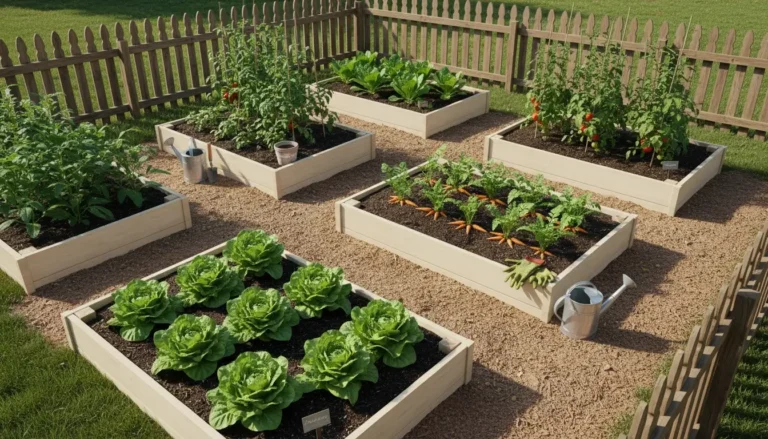
Raised garden beds showcasing optimal plant spacing for various vegetables, including lettuce, carrots, and tomatoes, within a well-organized backyard setting.

Optimal raised garden bed spacing varies by crop: 24–36 inches for tomatoes and squash, 14–18 inches for peppers and eggplant, and 1–6 inches for carrots and radishes. Square foot gardening divides beds into 1x1-foot grids for precise plant density. This boosts airflow, reduces disease, and fits ergonomics. Read on for widths, depths, and layouts.

Growing Tomatoes in Raised Beds: Ultimate Guide

A woman gardener carefully harvesting ripe tomatoes from a thriving tomato plant in a raised garden bed, demonstrating the benefits of growing tomatoes in a raised bed for improved yields and disease resistance.

Growing tomatoes in raised beds requires 18+ inches of loamy, pH 6.0-6.8 soil in a sunny spot with 8+ hours of direct light. Plant seedlings deeply, burying two-thirds of the stem for robust roots, space 18-24 inches apart, and water deeply 3-4 times weekly. Support with cages early. Read on to discover proven steps for bumper crops.

Raised Bed Lettuce: Plant, Water, Harvest in 8 Steps

A gardener watering leafy green lettuce plants growing in a raised garden bed, demonstrating the proper watering technique for a successful lettuce harvest.

Raised bed lettuce requires 1–2 inches of water weekly, 10–12 inches of spacing for heads (6 inches for loose leaf), and a balanced liquid feed every 2–3 weeks after the first month. Use heat-tolerant varieties and shade cloth to prevent bolting above 75°F, and harvest outer leaves (cut-and-come-again) to maintain continuous production for 4–6 weeks. Learn the full 8-step guide for year-round crispness.

Raised-Bed Companion Planting: A Simple Step-by-Step Guide

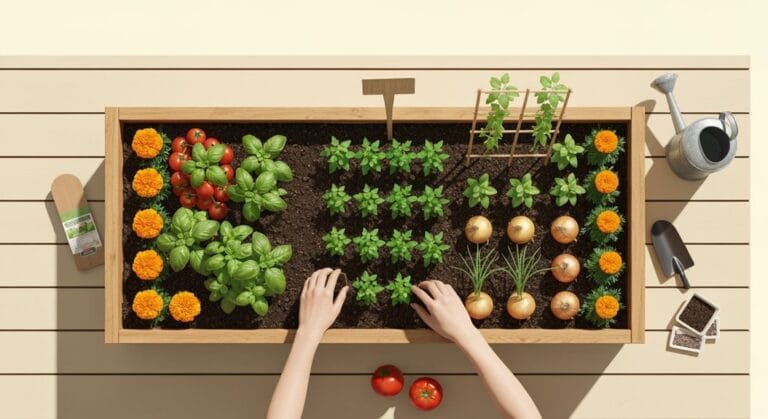
raised bed companion planting guide

Raised-bed companion planting transforms a standard 4x4 foot garden by mixing tall and short crops on a 1-foot grid to maximize yield and minimize pests. By pairing nitrogen-fixing legumes with heavy feeders and using square-foot spacing—placing one tomato per square foot compared to sixteen carrots—you create a resilient microclimate that outperforms monoculture rows. Read the full guide to master specific plant combinations and seasonal rotation schedules.

Master Raised Bed Gardening: Build, Soil & Harvest

Person filling a wooden raised garden bed with soil using a hand trowel for vegetable planting.

Raised bed gardening elevates soil in framed beds for optimal drainage, soil control, and easy access, ideal for vegetables in small spaces. Aim for 3-4 feet wide, 12-18 inches deep beds using a 40-40-20 mix of topsoil, compost, and sand. Start with site prep, gravel base, and landscape fabric. Read on to discover full building, planting, and troubleshooting steps.

How to Build Raised Beds on Concrete Patios That Thrive

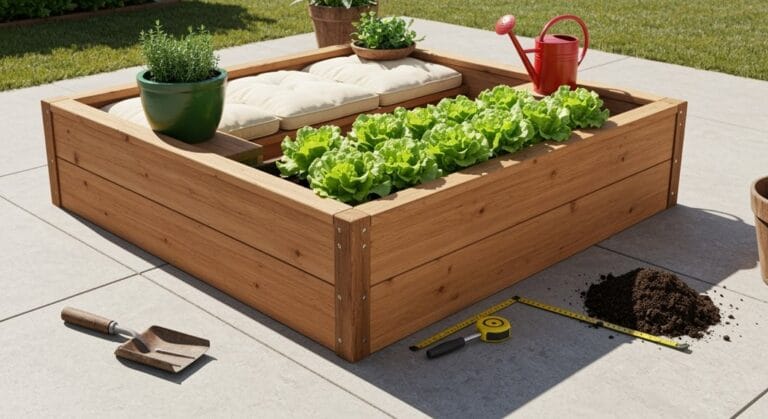
raised bed installation on concrete

Raised beds on concrete are elevated garden frames built directly on patios, requiring pavers for airflow, 2-3 inches of gravel drainage, geotextile fabric lining, and 60/40 soil-compost mix for success. This setup ensures root health, prevents rot, and manages heat reflection. Structural cross-bracing adds stability. Read on for step-by-step instructions.