
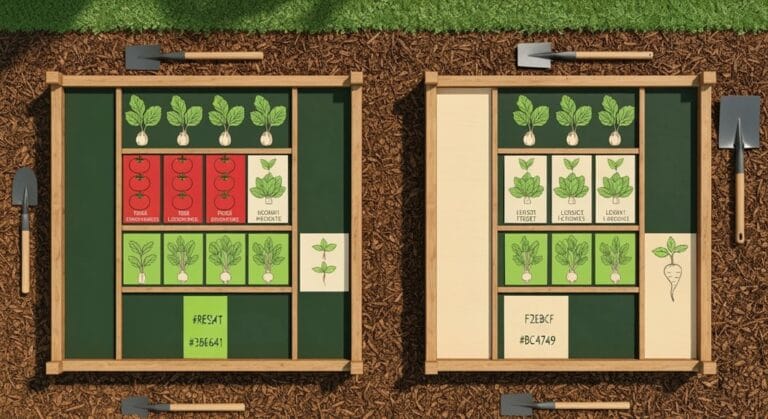

Getting your vegetable garden to thrive year after year is a wonderful goal, and it often hinges on one quiet, powerhouse practice: crop rotation methods. If you’ve ever felt like you were fighting the same pests or dealing with sluggish soil every season, you’re not alone. Rotation is simply moving the types of plants you grow from one spot to another annually to keep your soil healthy and confuse those unwanted critters.
Think of your garden beds as living rooms that need redecorating every year. You wouldn’t keep putting the same heavy furniture in the same corner forever, right? Your soil needs that same variety to maintain strong structure and balance out its diet. We’re going to look at a few straightforward annual crop rotation plans that are perfect for home gardeners and small vegetable growers focusing intensely on soil health.
It’s not rocket science, but it does require a little advance planning. We’ll cover the basics of nutrient balancing rotation, look at how grouping plants by their botanical families helps with pest management, and discuss why mapping your garden is essential for long-term success.
The Three Core Vegetable Bed Rotation Plans
If you’re looking for reliable ways to implement vegetable bed rotation, most experienced gardeners rely on variations of these three effective templates. They are designed to be easy to follow, whether you have a few raised beds or several long rows.
The key to making any of these work is discipline—stick to the plan for at least three seasons. That consistency is what truly lets you see the benefits, especially stronger natural defenses against pests and diseases.
- Simple Four-Step Swap: Leaf → Root → Fruit → Legume. You move everything one bed over each year.
- Botanical Family Rotation: Grouping plants by which family they belong to (e.g., nightshades separated from onions) is fantastic for long-term disease interruption. This often becomes a four-year crop rotation.
- The Nutrient Loop: Balancing soil demands by moving from nitrogen-providers (legumes) to heavy nitrogen users (fruiting plants).
Leaf → Root → Fruit → Legume Rotation: The Annual Standard
This is often the easiest structure for beginners to grasp. We’re organizing our beds based on what nutrients the plants primarily consume or replenish.
Why start with leafy crops, like spinach or kale? Simple: they are nitrogen hogs! You give them a strong start by adding rich compost—that’s usually your heaviest feeding of the year. Once they’ve used that top layer, the root crops follow.
Root crops, such as carrots or potatoes, are great candidates for the second spot. They utilize less nitrogen and help break up the soil structure immediately beneath the surface. Next come your fruiting plants, like tomatoes or peppers, which need moderate nutrients and often phosphorus.
Finally, you end the cycle with legumes, such as beans or peas. These crucial plants perform nitrogen fixation, meaning they pull nitrogen from the air and deposit it back into the soil, preparing the bed perfectly for the leafy crops to return the following year.
Four-Year Botanical Family Rotation Guide
When we talk about serious pest management and breaking disease cycles, grouping plants by their botanical families—not just their needs—is the secret weapon. Pests and diseases often specialize; for instance, something that loves your tomatoes (a nightshade) might completely ignore your cabbages.
In a four-year botanical family rotation, you dedicate one bed to each major group for the entire season, then rotate that group to the next bed the following year.
- Legumes (Leguminosae): Peas, beans – the nitrogen fixers.
- Brassicas (Brassicaceae): Cabbage, broccoli, kale – moderate feeders.
- Solanaceae (Nightshades): Tomatoes, potatoes, peppers.
- Alliums/Roots: Onions, garlic, carrots, beets.
You want to schedule the legumes right before the heaviest feeders (often the Brassicas or Solanaceae) to ensure they get that nitrogen boost. Keep a detailed map and label your beds clearly to avoid accidentally planting peas where tomatoes were last year—that defeats the whole purpose!
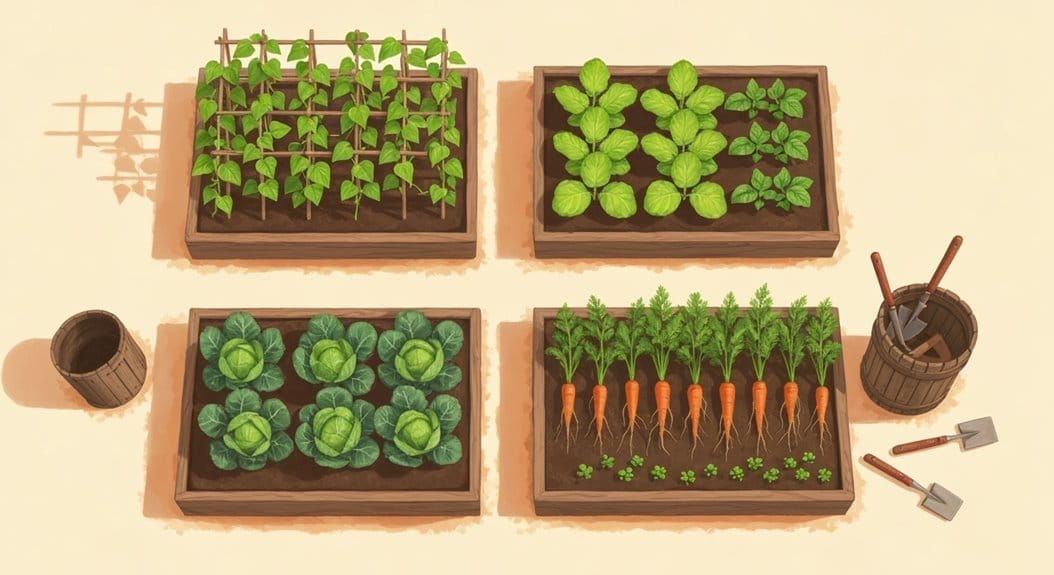
Four-Step Nutrient Balancing Rotation Explained
This method focuses purely on balancing the soil’s chemistry over the four-year cycle. It’s a deep dive into soil health that relies on feeding the soil, not just the plants.
This sequence traces back to historical farming concepts aiming for steady fertility without constant chemical inputs. The goal is to create a loop where one crop’s needs are satisfied by what the previous crop left behind.
- Year 1 – Legumes: They bank nitrogen for the garden.
- Year 2 – Heavy Feeders: These use the nitrogen boost to produce lots of leaves or fruit.
- Year 3 – Root Crops: They follow, utilizing residual nutrients and using their presence to break up compaction left by the heavy feeders.
- Year 4 – Grains/Cover Crops: These crops (or resting the bed) protect the soil structure through the off-season and prepare it gently for the next round of legumes.
When planning this approach, remember to incorporate compost heavily right before your heavy feeders arrive in Year 2. I’ve personally found that this cycling leads to noticeably better root development after just two full rotations.
Practical Planning: Integrating Cover Crops and Soil Testing
Now that we have the rotation sequence, we need to ensure the plan fits *your* actual garden space. This moves us beyond the simple A-B-C swaps and into the realm of detailed garden management.
The first step is crucial: Map everything. Look at the lay of your land. Where does water pool? Which zones get the most sun? Place your heavy feeders in the most fertile or well-drained spots. This isn’t rotation, exactly, but it ensures your rotation plan works with, not against, your land’s geography.
A key element missing in just swapping vegetables is integrating cover crops. This answers the content gap about when to plant cover crops for rotation:
Use the natural fallow periods in your area, usually late summer or early fall, to plant your cover crops. These aren’t meant to be harvested; they are meant to protect the soil, prevent erosion, and sometimes add organic matter before they are cut down in spring. Think of them as the fourth year of your nutrient balancing rotation when grown in place of a main cash crop.
Finally, the secret sauce to knowing what to add (and what not to add) is consistent measurement. You should aim to perform a basic soil testing every 1 to 3 years. Knowing your pH and existing nutrient levels means you can apply compost or amendments strategically right before the rotation cycle begins again.
Plan rotations to fit your land: map slopes, soil and drainage; rotate families three to five years, include legumes.
For minimizing soil-borne disease risk truly effectively, aim for a minimum return time of 4–5 years before planting a crop from the same family back into the exact same spot. This gives any lurking pathogens time to die off naturally.
Frequently Asked Questions About Vegetable Rotation
How to rotate crops in raised beds when space is limited?
It works exactly the same way! You just move the *group* of plants. If you have four 4×8 beds, Bed 1 gets tomatoes this year, but next year, the entire contents of Bed 1 move to Bed 2, and the bed that had legumes moves into Bed 1. Keep your records focused on the rotating family, not the physical container itself.
What about perennials like asparagus or rhubarb in rotation?
Perennials are the exception to the annual swap rule! Since they stay put for years, you simply plan your annual rotation *around them*. Treat the permanent perennial block as one large ‘family group’ that never moves. Ensure you heavily amend the adjacent annual beds with compost before planting the perennials’ neighbors, especially if they are heavy feeders.
When should I plant cover crops and how long should I leave them in my rotation?
For most regions, fall is the ideal time to seed cover crops, typically late summer or early fall, depending on your USDA zone’s first frost date. You generally want them established for at least 60 to 90 days to get maximum benefit, often tilling or cutting them down just before they bolt (flower fully) in the spring.
Can I save seeds from rotated crops without spreading disease?
Seed saving is safest when practicing strict rotation because the risk is lower. However, always scout your plants thoroughly during the season. Only save seeds from plants that showed absolutely no signs of stress or disease, and ensure whatever containers or tools you use for seed cleaning are thoroughly sanitized afterward.
Are there smartphone apps or tools to map my crop rotation?
Yes, there are several excellent digital tools now available! Apps designed for farm mapping (like those used by small commercial growers) can adapt well to large home gardens. They help you maintain that essential garden map, track fertilizer applications, and log your rotation history year-over-year effectively.
Conclusion: Start Rotating Today for Healthier Soil
Mastering these crop rotation methods—whether you choose the fast Leaf-Root-Fruit-Legume swap or the detailed four-year family rotation—is the single best investment you can make in your garden’s future. It’s about maximizing soil health naturally, reducing the guesswork, and saying goodbye to recurring pest problems.
Remember, rotation is the practice of moving plant families to different beds annually to break pest cycles and naturally balance soil nutrients. Start small this year—pick just one bed and apply one of these structured plans. You’ll quickly see healthier vegetable yields and feel more connected to your patch of earth. Happy rotating!


