
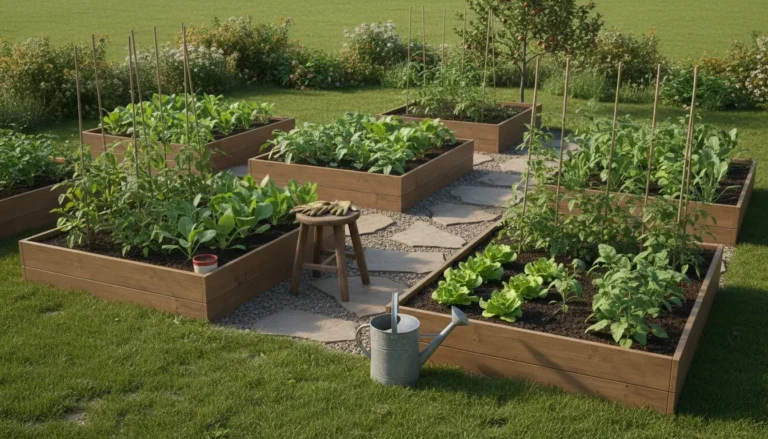

The Day I Realized I Was Doing It All Wrong
I remember standing in my backyard three years ago, staring at my first raised bed like it owed me money. I’d planted tomatoes in a single long row, just like my grandfather taught me.
The problem? Half my bed sat empty, and I was walking the same path fifty times a day, trampling my plants and wearing out my patience. It felt deeply inefficient.
That’s when I discovered there was an entire world beyond simple rows! There is more than one way to structure your space for gardening success.
Today, I’m going to walk you through the three best raised bed layouts so you can skip the frustration I went through. Whether you’re just starting out or you’ve been gardening for years, understanding the differences between row, grid, and block planting could genuinely transform how much you grow in the same footprint.
Row Layout: The Familiar Path
Let’s start with what most of us grew up seeing: the row layout. This is exactly what it sounds like—long, parallel lines of plants running the length of your bed, with clear walkways between them.
I still use rows for certain crops, and here’s why: they work beautifully when you want super easy access. Imagine harvesting tomatoes or beans straight down a line. You’re not contorting yourself or reaching over other plants.
It’s straightforward, predictable, and honestly, it feels comfortable when you’re used to traditional methods. This setup is intuitive if you’re coming from standard in-ground gardening.
The real advantages of the row layout:
- Your hands and tools have direct access to every plant.
- Taller crops like staked tomatoes don’t shade out the area as aggressively.
- Companion planting feels very natural in straight lines.
But here’s the catch—and this is why we need alternatives: those walkways between rows steal valuable growing space. Research from agricultural extensions suggests that traditional spacing wastes nearly 30% of your available gardening area.
Best for: Beans, tall staked crops, and gardeners who prioritize walking space access over squeezing out every last vegetable.
Grid Layout: The Organized Gardener’s Dream (Square Foot Gardening)
Now, let me introduce you to something that changed everything for me: the grid layout, often called square foot gardening (SFG). Picture your raised bed as a checkerboard. You divide the entire surface into 1×1 foot squares, and each square becomes its own little growing zone.
The beauty of the SFG system is its order. There is a plan! Each square holds plants sized appropriately for that space. One square might hold 1 cabbage, while another holds 16 radishes. You plan it on paper first, which means you actually know what you’re planting.
I started using grid layouts because I was tired of surprise weeds taking over. With plants closer together and everything mapped out, weeds have nowhere to hide. When plants mature, their leaves shade the soil, creating a natural defense for you.
The real wins with a grid layout:
- Dramatically increase yield per square foot compared to rows.
- Minimal weeding because there’s far less exposed soil.
- It’s easy to practice crop rotation and replant for succession harvesting.
- Perfect for beginners who love planning and structure.
The trade-off for this high density? Closer spacing means plants compete more for everything. You’ll need to water consistently and feed your soil regularly—your plants are eating right next door to each other!
If managed correctly, properly executed square foot gardening layout systems can produce significantly more food than traditional rows in the same footprint. This method directly addresses how to choose raised bed planting pattern for high output.
Best for: Lettuce, carrots, beets, herbs, radishes, and any gardener who finds satisfaction in organization.
Block Layout: Maximum Production, Minimum Fuss
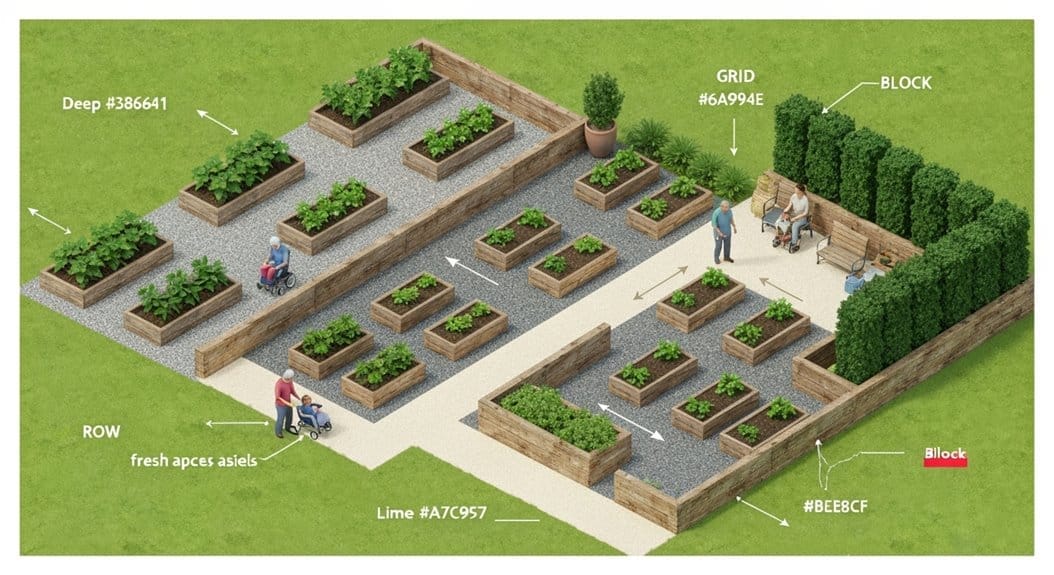
Then there’s the block layout—and this is often cited as the best way to plant a raised bed if your goal is sheer volume. Instead of relying on a checkerboard or distinct rows, you plant in dense, contiguous rectangular areas.
Imagine a bed where you have a solid square of carrots next to a solid square of beets, followed by a block of kale. There are no significant pathways cutting through the middle. It looks less like a grid and more like a garden quilt.
The philosophy here is to eliminate every inch of unused space. If you are working with a 4-foot-wide bed, you can plant across the entire 48 inches instead of reserving space for walking.
When your plants mature, their leaves touch and overlap, creating what gardeners call a living mulch. This keeps weeds down and helps retain valuable soil moisture.
I love block layout because it hits that sweet spot of density and resource use. One wide bed planted in blocks can often outperform two narrow rows in the same total footprint.
The genuine benefits of block planting:
- Highest overall yield per square foot compared to the other two methods.
- Reduced weeding due to dense foliage coverage creating shade.
- It’s easier to install row covers or frost cloth for season extension.
- It avoids the maintenance trade-off related to accessing the center of wide rows.
The reality check is that your soil demands need to be higher. Closer spacing means competing root systems, so the soil needs to be richer, and your watering schedule needs to be very consistent. Addressing this often means looking closely at soil amendments for block planting to ensure deep root health.
Best for: Maximizing production in small spaces and gardeners willing to invest in high-quality soil inputs.
Head-to-Head Comparison: Which Raised Bed Layout is Most Efficient?
Let’s compare these methods directly so you can determine which raised bed layout is most efficient for your needs. Remember, we are tracking primary keyword density alongside efficiency metrics.
| Factor | Row Layout | Grid Layout | Block Layout |
|---|---|---|---|
| Space Efficiency | Low (requires walkways) | High (structured spacing) | Very High (contiguous planting) |
| Ease of Access | Excellent | Good | Moderate (must reach from edges) |
| Setup Complexity | Minimal | Moderate (requires measuring/string) | Minimal |
| Water Needs | Low to Moderate | Moderate (due to proximity) | Moderate to High (dense foliage) |
| Ideal Bed Width | Any | 4 feet or less | 3–4 feet |
How to Choose Raised Bed Planting Pattern by Need

Here’s the helpful secret that experienced gardeners know: you don’t have to pick just one system! You can absolutely use a hybrid approach to maximize yield in raised beds.
Think about what you’re growing. Tall crops like tomatoes and sunflowers do great lining the north edge of a bed in a loose row configuration. Leafy greens and root vegetables thrive when jammed together in a grid or a block.
Also, consider your physical comfort. If bending over is rough on you, rows or border planting offer easier access to the center. If you are limited by footprint size, blocks are your most space-dense answer.
For example, if you have a long, narrow 2×10 foot bed, you might plant one row of beans down the center for support, and use the remaining space on either side in a block layout for lettuce and herbs. This customizes the comparison of raised bed planting methods to your space.
Start with what feels natural this season, then experiment next year. Gardening is a living experiment, after all.
The Takeaway: Choosing Your Ideal Raised Bed Layout
There is no single, universally perfect raised bed layout. Rows are comfortable and accessible. Grids are organized and reliably productive. Blocks are ultra-dense and force you to feed your soil deeply.
The technical answer to which layout is best depends entirely on your priorities: access, organization, or maximum yield.
The true gardener’s magic happens when you stop overthinking and just start planting. Plant something, watch what happens, and adjust next season. That’s how you learn what works best in your specific spot.
Your garden isn’t a final exam; it’s an ongoing, delicious experiment. Ready to maximize yield in raised beds? Pick one layout this season, commit to it, and see what grows.


