Category Soil Mix & Bed Filling

How to Build a Raised Garden Bed: Ultimate Guide

A person filling a green raised garden bed with a shovel, adding soil and organic matter, demonstrating the initial steps for preparing a raised bed.

To build a raised garden bed, select a sunny, level site with 6-8 hours of direct sunlight daily. Construct a frame 4 feet wide max and 12-18 inches deep using rot-resistant cedar or steel. Loosen underlying soil, add a drainage layer of branches or cardboard, and fill with a 1:1:1 blend of topsoil, compost, and grit. Read on for complete steps.
Best Soil Mix for Raised Beds: Ultimate Recipe

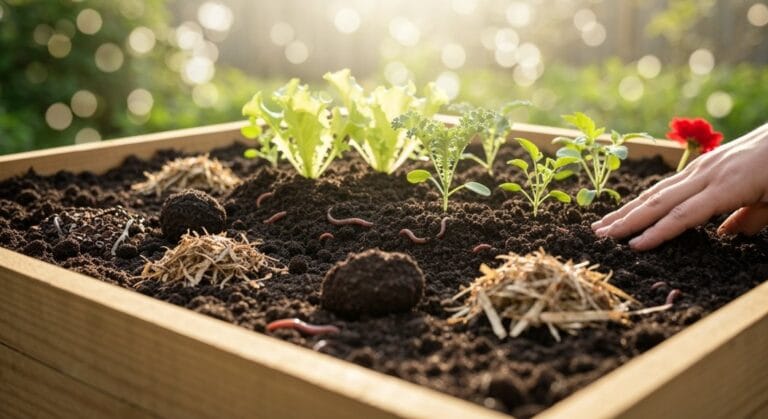
ideal well draining nutrient rich soil

The best soil mix for raised beds consists of 50% premium topsoil, 30-40% high-quality compost, and 10-20% coarse materials like sand or perlite for optimal drainage and aeration. This loamy blend ensures moisture retention, nutrient cycling, and root health. Mix thoroughly for stability. Read on for exact ratios, amendments, and maintenance tips.

Perfect Raised Bed Soil Mix Ratio for Epic Harvests

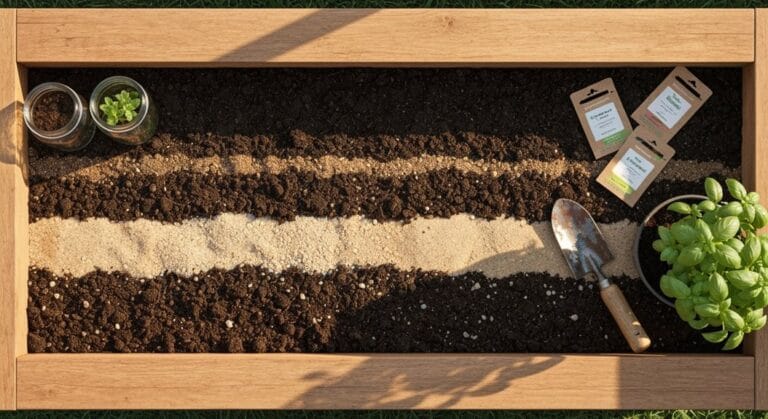
best raised bed soil mix

The optimal raised bed soil mix ratio is 40% topsoil, 30% compost, 20% coarse sand or grit, and 10% organic amendments like worm castings or biochar. This formula provides superior drainage, aeration, and nutrient retention for healthy roots. Test soil pH and adjust annually for best results. Read on to explore customized ratios and maintenance.

Bulk vs Bagged Soil: Cost, Quality & Best Uses

bulk vs bagged cost and quality

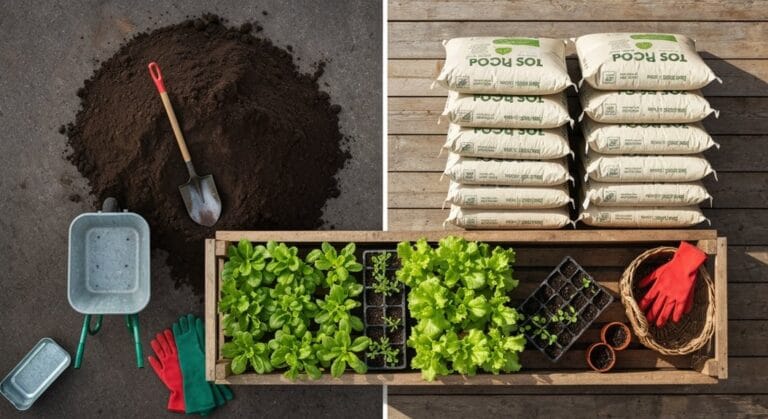
Bulk soil costs $20-40 per cubic yard, making it far cheaper than bagged soil at $67.50 equivalent for projects over 1 yard. Bulk offers fresher organic matter, better nutrient content, and custom blends, while bagged excels in convenience and sterility for small tasks. Delivery fees and storage are key considerations. Read on to discover the best choice for your project.

Lasagna Gardening in Raised Beds: No-Dig Magic

lasagna garden raised bed

Lasagna gardening in raised beds is a no-dig method of building fertile soil by layering cardboard, coarse twigs, carbon-rich browns, and nitrogen-rich greens inside a raised frame. Begin with weed-blocking cardboard, add 2-3 inches of drainage, then alternate moist 3-4 inch layers of browns to greens in a 3:1 ratio. Layers decompose in 4-6 months into crumbly, nutrient-dense soil. Read on for the full guide.

Master Raised Bed Gardening: Build, Soil & Harvest

Person filling a wooden raised garden bed with soil using a hand trowel for vegetable planting.

Raised bed gardening elevates soil in framed beds for optimal drainage, soil control, and easy access, ideal for vegetables in small spaces. Aim for 3-4 feet wide, 12-18 inches deep beds using a 40-40-20 mix of topsoil, compost, and sand. Start with site prep, gravel base, and landscape fabric. Read on to discover full building, planting, and troubleshooting steps.