Sarah

Sarah

Sarah Johnson is the lead gardening researcher and curator at Home Food Harvest. She specializes in compiling evidence-based growing methods, analyzing manufacturer specs, and distilling practical insights from gardening communities to help small-space and urban growers harvest fresh food at home. Start small, harvest big!

Raised Bed Lettuce: Plant, Water, Harvest in 8 Steps

A gardener watering leafy green lettuce plants growing in a raised garden bed, demonstrating the proper watering technique for a successful lettuce harvest.

Raised bed lettuce requires 1–2 inches of water weekly, 10–12 inches of spacing for heads (6 inches for loose leaf), and a balanced liquid feed every 2–3 weeks after the first month. Use heat-tolerant varieties and shade cloth to prevent bolting above 75°F, and harvest outer leaves (cut-and-come-again) to maintain continuous production for 4–6 weeks. Learn the full 8-step guide for year-round crispness.

Grow Romaine in Raised Beds: Sun, Timing & Shade Tips

romaine in raised beds

Romaine lettuce requires 4–6 hours of direct sun daily, 10-12 weeks of indoor growth before transplanting, and 10 inches of spacing in raised beds for optimal head formation. To prevent bolting, provide 30–50% shade cloth when temperatures exceed 75°F, and succession sow every 2–3 weeks for continuous harvest. Read the full guide to master the timing, sun, and shade for crisp romaine.

Raised Beds: Benefits, Limits, and When to Use

raised beds improved drainage soil control

Raised beds warm soil 2-3 weeks faster than in-ground plots and drain better, allowing earlier planting of warm-season crops like tomatoes and peppers. Fill them with a 70% topsoil and 30% compost mix at 10-12 inches deep for most plants, or 12-18 inches for root crops. While they cost more upfront and require frequent watering, raised beds cut weeds by up to 97% and work best on poor, rocky, or contaminated soil. Read the full guide to learn when raised beds beat in-ground gardens and how to build yours.

Grow Big Strawberries in a Raised Bed

big strawberries raised bed

To grow big strawberries in a raised bed, fill it with a loose mix of 2 parts topsoil, 2 parts potting soil, and 1 part compost at a depth of 6–12 inches. Plant crowns 12–18 inches apart to maximize root growth, and provide 1–2 inches of water weekly using drip irrigation. This method offers better drainage and warmer soil than in-ground plots, resulting in larger, healthier berries. Read the full article for the best varieties and pruning tips to boost your harvest.

Raised-Bed Companion Planting: A Simple Step-by-Step Guide

raised bed companion planting guide

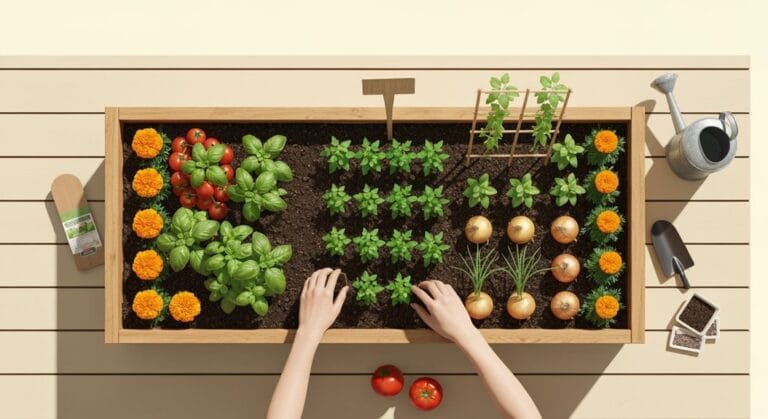
Raised-bed companion planting transforms a standard 4x4 foot garden by mixing tall and short crops on a 1-foot grid to maximize yield and minimize pests. By pairing nitrogen-fixing legumes with heavy feeders and using square-foot spacing—placing one tomato per square foot compared to sixteen carrots—you create a resilient microclimate that outperforms monoculture rows. Read the full guide to master specific plant combinations and seasonal rotation schedules.

Easy Companion Planting Guide for Herb Beds

easy herb companion guide

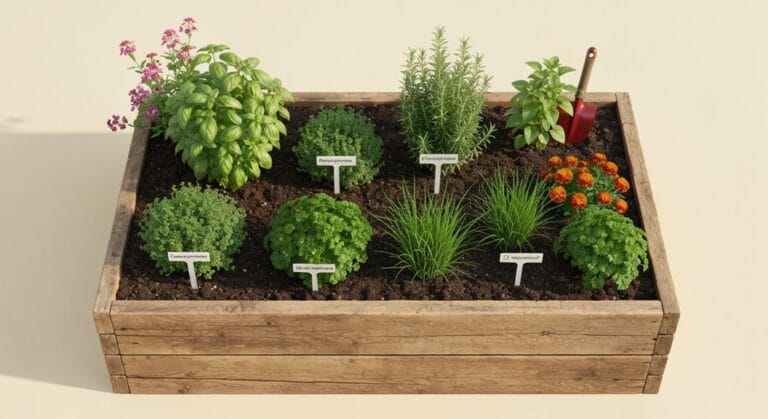
Build a thriving herb bed by grouping Mediterranean herbs (rosemary, thyme, oregano) in dry zones and moisture-lovers (basil, chives, cilantro) in damper spots, then add calendula or nasturtiums to attract beneficial insects and trap pests naturally. This companion planting approach reduces pest pressure compared to single-herb plantings while improving soil health through diverse root depths and nitrogen-fixing plants. Space compact herbs 6 inches apart, medium herbs 12 inches, and large spreaders 18–24 inches for optimal growth. Read the full guide to master specific pairings and maintenance routines that keep your herb bed productive year-round.

Automatic Drip Irrigation for Raised Beds: Easy Guide

raised bed irrigation guide

Drip irrigation for raised beds is a low-pressure system that delivers water precisely to roots via emitters on tubing lines. Key parts include a timer, pressure regulator, filter, mainline, and 0.5-2 GPH emitters. It cuts water use by 30-50% over sprinklers and aids weed suppression. Read on for installation steps and maintenance.

Raised Bed Covers: Install, Choose & Maintain Easily

raised bed covers guide

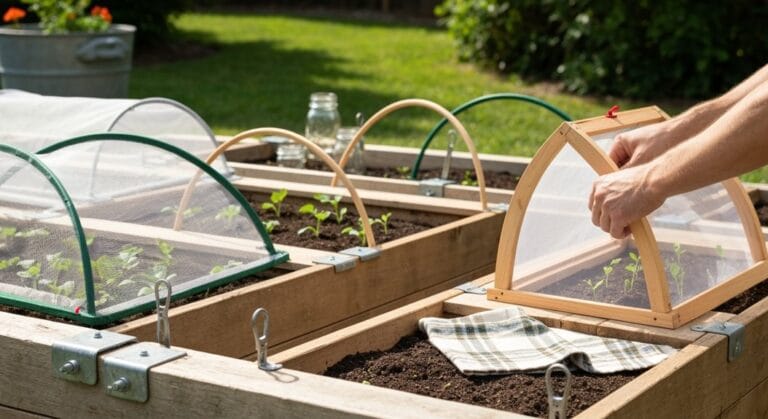
Raised bed covers are hoop-framed enclosures using UV-stabilized fabrics, plastics, or nets to protect raised garden beds from frost, pests, sun, and weather while enabling season extension and soil warming. Select row covers for frost protection or shade cloth for heat; install mini hoops every 4 feet with rebar anchors. Maintain monthly with inspections and ventilation. Read on for detailed steps and ROI examples.

Lasagna Gardening in Raised Beds: No-Dig Magic

lasagna garden raised bed

Lasagna gardening in raised beds is a no-dig method of building fertile soil by layering cardboard, coarse twigs, carbon-rich browns, and nitrogen-rich greens inside a raised frame. Begin with weed-blocking cardboard, add 2-3 inches of drainage, then alternate moist 3-4 inch layers of browns to greens in a 3:1 ratio. Layers decompose in 4-6 months into crumbly, nutrient-dense soil. Read on for the full guide.